Breema: A Revolutionary Approach to Mind-Body Wellness
You know that feeling when you’ve tried everything for your back pain-chiro, physio, the lot-but something still feels "off"? It’s not just muscle tension; it’s like your body is holding onto a story it hasn’t finished telling. Enter Breema, a hands-on, non-invasive bodywork technique developed by Sam Bracken in the 1970s that focuses on restoring the natural flow of energy through gentle touch and specific breathing patterns. Unlike traditional massage where the therapist does all the work, Breema flips the script. You aren’t there to be fixed; you’re there to be witnessed. And honestly? That shift changes everything.
What Actually Is Breema?
If you’ve never heard of it, don’t worry. It’s not as mainstream as yoga or acupuncture, but its roots are deep. The word "Breema" comes from Sanskrit, meaning "to bring into harmony." But let’s strip away the mysticism for a second. At its core, Breema is a form of somatic therapy. It operates on the idea that our bodies store unresolved emotions and physical trauma in our tissues. When we experience stress, injury, or even just a bad day, our muscles tighten up to protect us. Over time, these protective contractions become chronic, blocking the free flow of what practitioners call "energy" or life force.
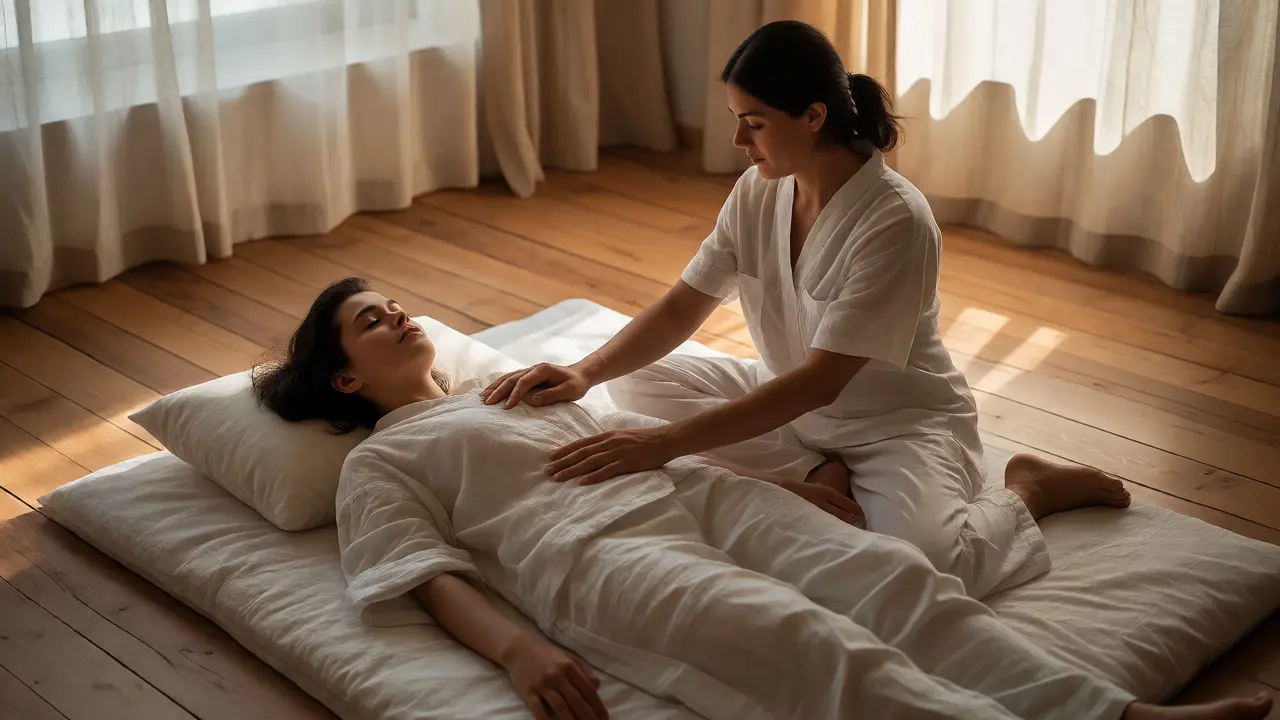
Sam Bracken, the creator, was originally a chiropractor who grew frustrated with the limitations of purely mechanical adjustments. He noticed that patients often needed more than just alignment-they needed emotional release and a sense of safety. So, he combined elements of martial arts, meditation, and intuitive touch to create a system that prioritizes connection over correction. In a Breema session, the practitioner uses soft, sustained pressure rather than deep tissue kneading. They might hold a limb, gently stretch a spine, or simply place their hands on your chest while you breathe. It’s quiet, it’s slow, and it’s surprisingly powerful.
The Three Principles of Harmony
You can’t talk about Breema without mentioning its foundational framework: the Three Principles of Harmony. These aren’t just abstract concepts; they’re the practical rules that guide every interaction in a session. If you’re skeptical about "energy," think of these as guidelines for nervous system regulation.
- Physical Harmony: This is about balance in the body. The practitioner ensures that no part of you is being forced or ignored. Every touch is balanced against another, creating a stable environment where your body feels safe enough to relax.
- Energetic Harmony: This refers to the flow of vitality. By using light touch and breath, the goal is to remove blockages that cause stagnation. It’s less about pushing energy through and more about clearing the path so it can move on its own.
- Spiritual Harmony: Don’t let the word scare you off. Here, it means presence. Both the giver and receiver are fully engaged in the moment. There’s no agenda, no fixing, just pure awareness of each other. This creates a profound sense of trust and openness.
When these three align, the result is often a deep state of relaxation that goes beyond mere comfort. People frequently report feeling "lighter" or "clearer" after a session, not because their muscles were broken down, but because their nervous system finally got the signal to stand down.

How a Session Differs from Traditional Massage
Let’s be real: if you book a Breema session expecting a Swedish massage, you might be confused at first. There’s no oil, no aggressive kneading, and often, very little movement. You stay clothed. The practitioner might spend ten minutes just holding your foot. Why? Because in Breema, stillness is active.
| Feature | Breema | Deep Tissue Massage |
|---|---|---|
| Primary Goal | Restoring energetic flow and emotional safety | Releasing physical muscle adhesions and pain |
| Touch Style | Soft, sustained, light-to-medium pressure | Firm, deep, focused on specific knots |
| Client Role | Active participant (breathing, awareness) | Passive recipient |
| Aftermath | Often immediate clarity and calm | Can involve soreness or fatigue |
| Focus Area | Whole body connectivity and breath | Specific problem areas (e.g., lower back) |
In a standard massage, the therapist targets the symptom-the tight shoulder, the sore neck. In Breema, the practitioner looks at the whole person. If your shoulder is tight, they might work on your hip or your breath instead, understanding that the body is an interconnected web. It’s like untangling a knot in a ball of yarn; sometimes you have to loosen the strands nearby to free the center.
The Science Behind the Soft Touch
Critics often dismiss energy work as placebo. But modern neuroscience offers some compelling explanations for why gentle touch works. We have specialized nerve fibers called C-tactile afferents that respond specifically to slow, soft stroking. When stimulated, these nerves send signals directly to the insular cortex in the brain, which processes emotion and self-awareness. This triggers the release of oxytocin, the bonding hormone, and lowers cortisol, the stress hormone.
So, when a Breema practitioner holds your hand or rests their palm on your stomach, they aren’t just doing magic. They’re hacking your parasympathetic nervous system. They’re telling your brain, "It’s safe to rest now." For people dealing with anxiety, PTSD, or chronic stress, this physiological shift is crucial. It’s not just about feeling good; it’s about retraining your body’s baseline response to the world.

Who Benefits Most from Breema?
You don’t need to be in pain to benefit from Breema. While it helps with physical discomfort, its true strength lies in addressing the mind-body split. Many of us live entirely in our heads, disconnected from our physical sensations. Breema brings you back home to your body.
This approach is particularly helpful for:
- Trauma Survivors: The gentle, non-invasive nature allows individuals to reconnect with their bodies without triggering fight-or-flight responses.
- Chronic Stress Sufferers: If you feel "wired but tired," Breema’s focus on breath and stillness can help reset your rhythm.
- Athletes and Performers: It enhances body awareness and proprioception, helping with coordination and recovery without the risk of injury from deep work.
- Grief and Emotional Processing: Sometimes words fail us. Bodywork provides a container for emotions to surface and move through naturally.
I remember working with a client who had severe insomnia. She’d tried melatonin, weighted blankets, and sleep apps. Nothing worked. After three sessions of Breema, she told me she slept eight hours straight for the first time in years. Not because her muscles were relaxed, but because she finally felt safe enough to let go.
Is Breema Right for You?
If you’re looking for a quick fix or a rigorous workout, this might not be it. Breema requires patience. It asks you to surrender control and trust the process. But if you’re curious about alternative ways to heal, or if you feel stuck in a cycle of tension that traditional methods haven’t cracked, it’s worth exploring.
Look for a certified practitioner. Training in Breema is rigorous, focusing heavily on the practitioner’s own inner work. You want someone who isn’t just applying techniques but who embodies the principles of harmony themselves. Ask them how they handle silence. Ask them about their own practice. A good Breema teacher will listen more than they speak.
Do I need to undress for a Breema session?
No, you remain fully clothed throughout the session. Practitioners usually recommend wearing comfortable, loose-fitting clothing made of natural fabrics like cotton or linen. This allows for ease of movement and helps maintain a barrier of comfort, which can make it easier to relax deeply.
Is Breema painful?
Generally, no. Breema is known for being gentle and non-invasive. The touch is soft and sustained, designed to soothe rather than provoke. However, if you hold significant emotional or physical tension, you might experience some discomfort as those layers begin to release, but it should never feel sharp or injurious. Communication with your practitioner is key.
How many sessions do I need to see results?
This varies greatly depending on individual needs. Some people feel a noticeable shift after a single session, particularly in terms of mental clarity and relaxation. For deeper issues like chronic pain or trauma, a series of 4-6 sessions is often recommended to allow the body to integrate changes gradually. Consistency matters more than frequency.
Can Breema help with anxiety?
Yes, many people find Breema highly effective for managing anxiety. The practice emphasizes grounding and present-moment awareness, which counteracts the rumination typical of anxiety disorders. The activation of the parasympathetic nervous system through gentle touch also physically reduces the symptoms of stress, such as rapid heartbeat and shallow breathing.
Is Breema considered medical treatment?
No, Breema is classified as a complementary and alternative therapy. It is not a substitute for medical diagnosis or treatment. While it supports overall well-being and can alleviate certain symptoms, it should be used alongside conventional healthcare, especially for serious medical conditions. Always consult your doctor before starting any new wellness regimen.