
Amma Massage: A Pathway to Inner Harmony
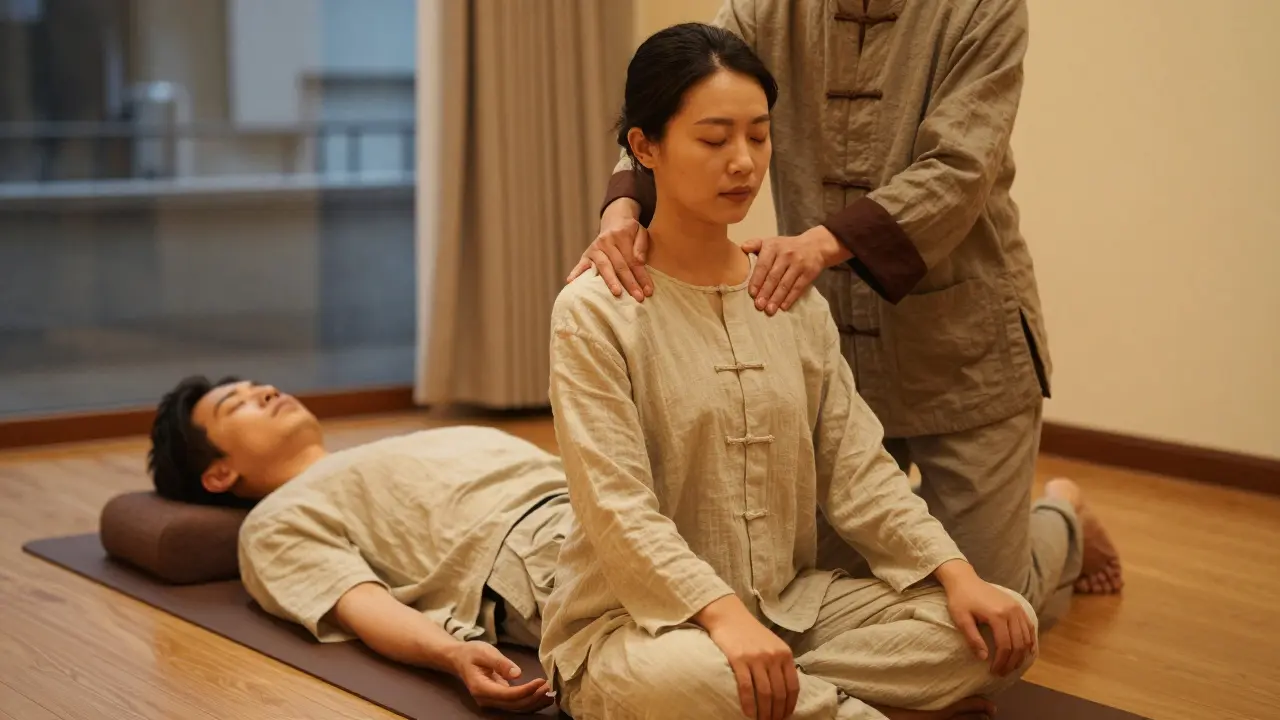
Amma massage isn’t just another type of bodywork. It’s a 2,000-year-old healing practice from China that doesn’t just relax your muscles-it rewires how your body and mind connect. If you’ve ever felt stuck in stress, drained by daily life, or out of sync with yourself, Amma massage might be the quiet reset you didn’t know you needed.
What Exactly Is Amma Massage?
Amma massage comes from the Chinese words an (press) and ma (rub). Unlike Swedish massage, which focuses on long strokes and kneading, Amma works along energy pathways called meridians. These are the same channels used in acupuncture and qigong. Practitioners use their thumbs, palms, fingers, and sometimes elbows to apply rhythmic pressure to specific points along these lines.
The goal isn’t to loosen tight shoulders or ease a sore back-though those things often happen. The real aim is to unblock stagnant energy, or qi, that’s causing discomfort. Think of it like clearing a clogged drain. When energy flows freely, pain fades, sleep improves, and you just feel… lighter.
Amma is often done through clothing. No oils. No undressing. You sit or lie fully dressed on a mat or low table. This makes it accessible, private, and easy to fit into a busy day. Many people in China still get Amma at work, in markets, or even at home-just like a quick coffee break.
How It Works: More Than Just Pressure
Amma doesn’t guess where you’re holding tension. It follows a map. There are 12 main meridians, each linked to an organ system. The Liver meridian runs from your big toe up to your ribs. The Heart meridian travels from your chest to your little finger. When you’re stressed, these lines get tight. Amma therapists feel for these spots-areas that feel hard, tender, or numb-and gently work them open.
One study from the Beijing University of Chinese Medicine tracked 120 people with chronic stress. After six weekly Amma sessions, 78% reported better sleep, lower anxiety, and fewer headaches. Not because they were rubbed harder, but because their energy flow improved.
It’s not magic. It’s physiology. Pressure on acupressure points sends signals to your nervous system. Your body hears it as a cue to shift out of fight-or-flight mode. Cortisol drops. Heart rate slows. Breathing deepens. You don’t need to believe in energy to feel the difference.
What You’ll Feel During a Session
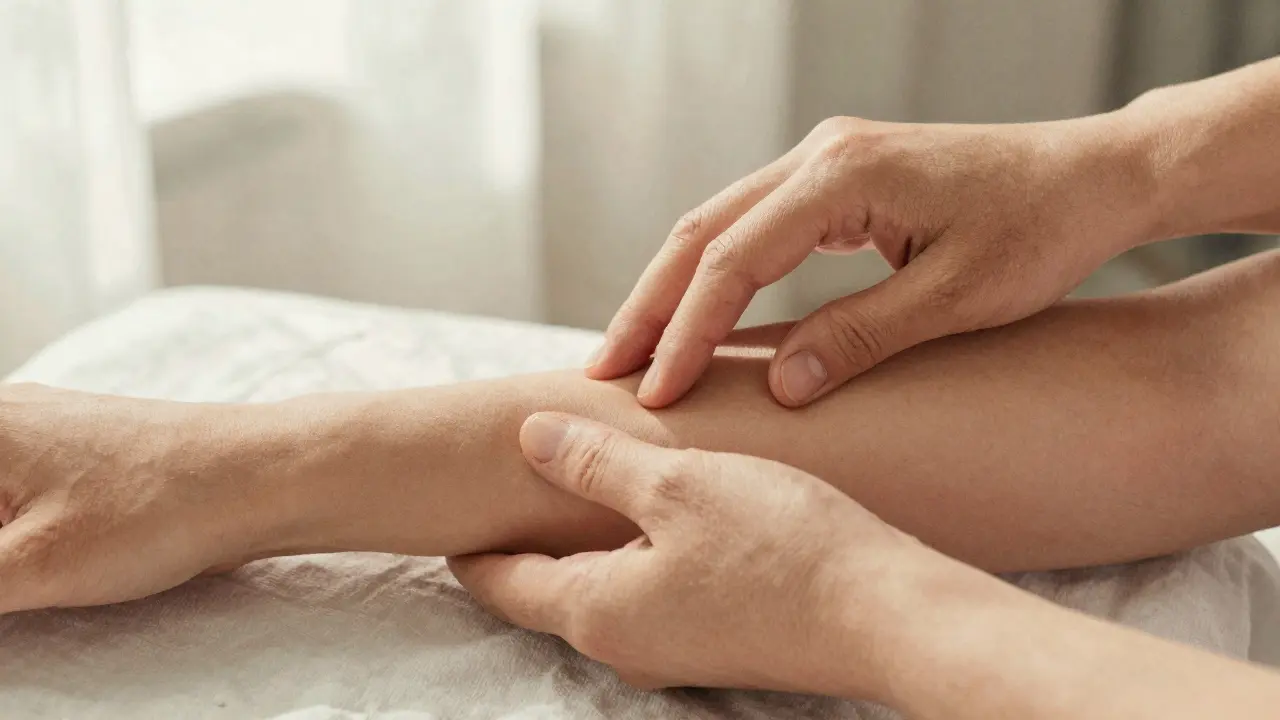
Most people expect deep pressure. But Amma isn’t about pain. It’s about precision. A therapist might press for 10 seconds on a point near your wrist-where the Pericardium meridian runs-and hold it just long enough to feel a subtle pulse or warmth spread up your arm. That’s the energy moving.
You might feel tingling, warmth, or even a brief ache. That’s normal. It’s not the therapist forcing anything. It’s your body responding. Some people cry during sessions-not from sadness, but from release. Others fall asleep. Both are signs your nervous system is resetting.
Afterward, you won’t feel sore. You’ll feel clear-headed. Like you just woke up from a long nap, but didn’t actually sleep. Your thoughts feel calmer. Your body feels connected. That’s the harmony Amma builds.
Who Benefits Most?
Amma isn’t just for people with chronic pain. It’s for anyone who feels disconnected.
- If you’re constantly tired but can’t sleep, Amma helps regulate your circadian rhythm by balancing the Kidney and Heart meridians.
- If you’re anxious and can’t quiet your mind, the Spleen and Liver meridians are often targeted to calm overthinking.
- If you’re a parent, a nurse, or a shift worker-someone who gives all day and has nothing left-Amma restores what’s been drained.
- If you’ve tried yoga, meditation, or therapy but still feel stuck, Amma offers a physical entry point into emotional release.
It’s not a cure-all. But it’s one of the few therapies that works on both the body and the nervous system at the same time. No pills. No devices. Just hands, breath, and time.
How It Compares to Other Massage Styles
| Feature | Amma Massage | Swedish Massage | Acupuncture | Shiatsu |
|---|---|---|---|---|
| Pressure Type | Targeted, rhythmic, point-specific | Long, flowing strokes | Needles at acupoints | Similar to Amma, but often more intense |
| Through Clothing? | Yes | No | No | Usually yes |
| Focus | Energy flow (qi) and organ systems | Muscle relaxation | Energy points via needles | Energy flow, Japanese style |
| Session Length | 30-60 minutes | 60-90 minutes | 30-45 minutes | 45-60 minutes |
| Best For | Stress, fatigue, emotional blockages | General relaxation | Pain, chronic conditions | Stress, mild pain, mobility |
Amma stands out because it doesn’t require you to strip down or lie still for an hour. You can get it during lunch. You can get it in a quiet corner of a wellness center. It’s quiet, effective, and deeply personal.
Where to Find It-And What to Look For
In Sydney, Amma massage isn’t everywhere. But it’s growing. Look for practitioners who mention traditional Chinese medicine, meridian therapy, or acupressure in their descriptions. Avoid places that call it "Chinese relaxation massage" without explaining the energy work-that’s often just a watered-down version.
A good Amma therapist will ask about your sleep, digestion, and emotional state before starting. They won’t just ask where you’re sore. They’ll want to know if you’ve been feeling irritable, bloated, or emotionally drained. That’s because they’re treating your whole system, not just your back.
Most sessions cost between $70 and $120. It’s not cheap, but it’s often cheaper than a series of physio sessions or therapy appointments. And you feel the effects faster.
What to Expect After Your First Session
Some people feel amazing right away. Others feel a little spacey or tired. That’s not a bad sign. Your body is processing. Drink water. Avoid caffeine or alcohol for the rest of the day. Don’t schedule anything intense.
The real changes show up over time. After three sessions, most people report: deeper sleep, fewer stomach aches, less jaw clenching, and a quieter mind. It’s subtle. But it’s real.
One woman I know, a teacher in Bondi, started Amma after her divorce. She said the first time she felt her chest open during a session, she cried-not because she was sad, but because she hadn’t felt that light in years. "It wasn’t about letting go," she told me. "It was about remembering I still had space inside."
Can You Do Amma Yourself?
Yes. And you should.
You don’t need a therapist to start feeling the benefits. Try this simple routine before bed:
- Press firmly with your thumb on the space between your thumb and index finger (LI4 point). Hold for 30 seconds. This calms anxiety.
- Find the soft spot just below your knee, on the inner side (SP6 point). Press gently for 20 seconds. Helps with sleep and digestion.
- Use your knuckles to rub along your inner forearm, from wrist to elbow (Pericardium meridian). Do this for a minute. It eases emotional tension.
Do this for five minutes a day. In a month, you’ll notice you breathe deeper. You’ll pause before reacting. You’ll feel more grounded.
Amma isn’t about perfection. It’s about presence. You don’t need to be an expert. You just need to show up-for yourself.
Why It Matters Now More Than Ever
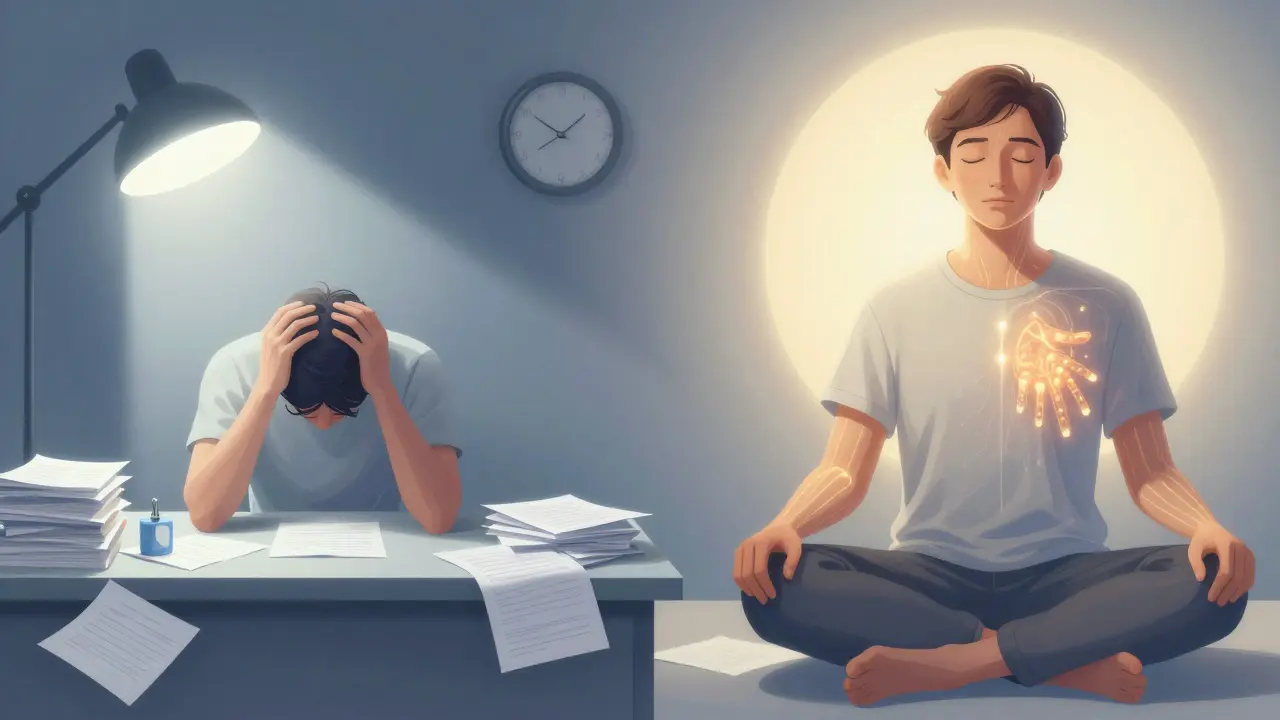
We live in a world that rewards speed, output, and constant connection. We’re told to push harder, sleep less, and multitask more. But our bodies weren’t built for this.
Amma massage is a quiet rebellion. It says: Rest isn’t lazy. Healing isn’t indulgent. You don’t need a spa day or a weekend getaway to reconnect. You just need someone to press gently on the right spot-and hold space while your body remembers how to heal.
It’s not about fixing what’s broken. It’s about remembering what was always there: your own rhythm. Your own balance. Your own harmony.
Is Amma massage the same as acupuncture?
No. Acupuncture uses thin needles inserted into specific points to stimulate energy flow. Amma uses manual pressure instead. Both work on the same meridians, but Amma is non-invasive and can be done through clothing. It’s often used as a gentler alternative or complement to acupuncture.
Can Amma massage help with anxiety?
Yes. Research shows Amma massage lowers cortisol levels and activates the parasympathetic nervous system-the part of your body that helps you relax. By targeting meridians linked to the heart and liver, it helps calm racing thoughts and emotional overwhelm. Many people report feeling clearer-headed and more centered after just one session.
Do I need to believe in energy for Amma to work?
No. While Amma is rooted in traditional Chinese medicine’s concept of qi, the benefits are measurable in physical terms. Pressure on acupressure points triggers nerve signals that reduce pain, lower heart rate, and improve sleep. You don’t need to believe in energy to feel the results. Think of it like physical therapy for your nervous system.
How often should I get Amma massage?
For general wellness, once every two to four weeks is ideal. If you’re dealing with high stress, insomnia, or chronic tension, weekly sessions for 4-6 weeks can create lasting shifts. After that, you can taper to maintenance. Many people keep coming back because they notice how much better they feel-not just physically, but emotionally.
Is Amma massage safe during pregnancy?
Yes, with some precautions. Many trained therapists specialize in prenatal Amma. They avoid certain points, like LI4 and SP6, which can stimulate contractions in early pregnancy. Always tell your therapist you’re pregnant. When done correctly, it can ease back pain, reduce swelling, and calm nervous energy-making pregnancy more comfortable.
Next Steps: Try It Yourself
You don’t need to book a session to start. Tonight, before bed, find the space between your thumb and index finger. Press gently with your other thumb. Hold for 30 seconds. Breathe. Feel the tension soften. That’s Amma. That’s harmony.