
Trigger Point Massage for Migraines: Relief, Techniques, and Safety
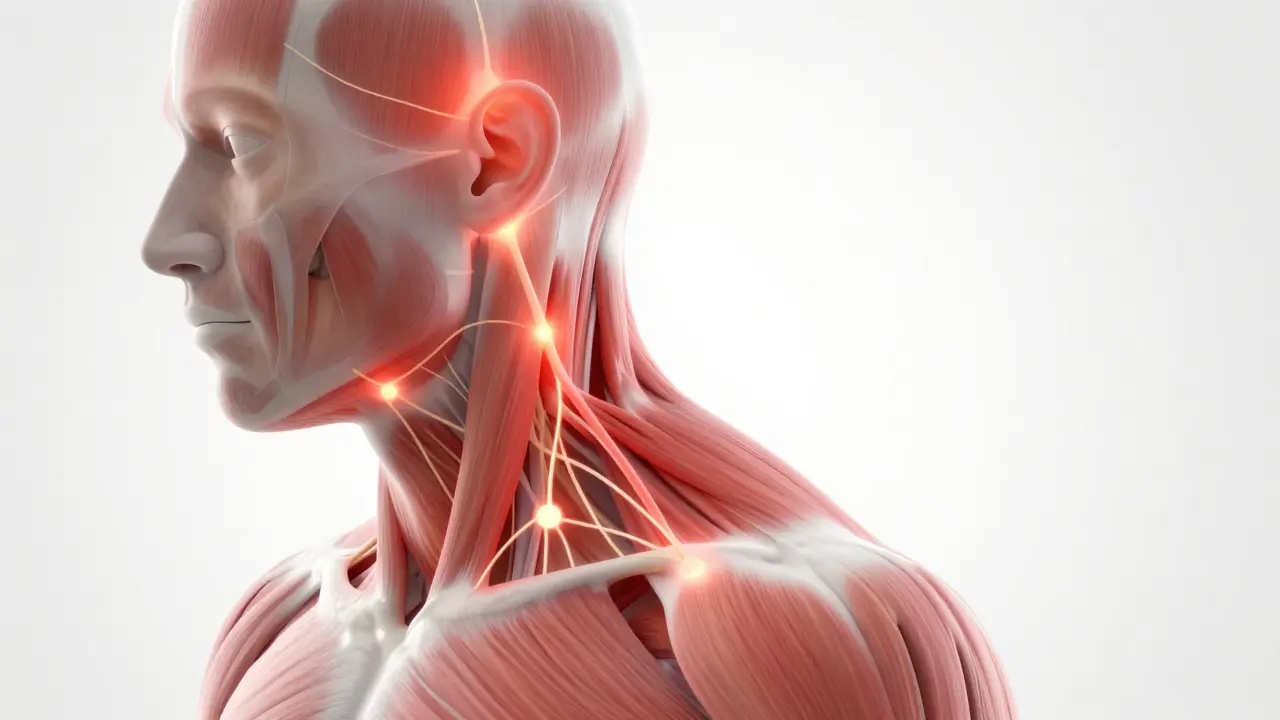
That familiar throb behind your eyes or the crushing weight around your temples doesn't just come from thin air. For millions of people, migraines are not merely a neurological event; they are often rooted in the muscles of the neck, shoulders, and scalp. While pharmaceuticals dominate the conversation, trigger point massage is a manual therapy technique that applies focused pressure to hyperirritable spots in skeletal muscle to relieve pain and restore function. Also known as myofascial trigger point release, this approach targets specific knots-known as myofascial trigger points (MTrPs)-that can refer pain directly to the head, mimicking or exacerbating migraine symptoms.
You might have tried ibuprofen, triptans, or even acupuncture without lasting success. If your headaches always seem to start with a stiff neck or tight traps, the issue may be mechanical rather than purely chemical. This guide breaks down how these muscle knots connect to your brain, which specific points cause head pain, and how you can safely address them yourself or with a professional.
How Muscle Knots Trigger Head Pain
To understand why massaging your shoulder helps your head, we need to look at the concept of referred pain. A myofascial trigger point is a hypersensitive spot within a taut band of skeletal muscle that causes local or distant pain when compressed. These aren't just random lumps; they are areas where muscle fibers are stuck in a contracted state, creating a localized energy crisis that irritates nearby nerves.
When these points are active, they send pain signals along nerve pathways that converge in the brainstem. The brain sometimes misinterprets these signals, attributing the pain to the head rather than the neck or shoulder. This phenomenon is called referred pain. For example, a tight knot in the upper trapezius muscle can send shooting pain up into the temple and behind the eye, feeling exactly like a migraine aura or onset.
Research supports this connection. Studies published in journals like Cephalalgia have shown that patients with chronic migraines often have significantly more active trigger points in their cervical and pericranial muscles compared to those without headaches. By releasing these points, you interrupt the pain signal before it fully escalates into a full-blown migraine episode.
Key Trigger Points That Cause Migraines
Not every knot causes head pain. To get relief, you need to target the specific muscles involved in cranial tension. Here are the primary culprits:
- Sternocleidomastoid (SCM): Located on the side of your neck, this muscle connects your sternum and collarbone to your skull. Trigger points here often cause deep, throbbing pain behind the eye, sinus-like pressure, and even dizziness. It’s a major contributor to vestibular migraines.
- Upper Trapezius: The large muscle spanning your neck and shoulders. Tightness here refers pain to the jaw, temple, and top of the head. If you spend hours hunched over a computer, this is likely your primary offender.
- Splenius Capitis: Found at the back of the neck, beneath the superficial layers. Points here typically cause pain that wraps around the head from the back to the forehead, often accompanied by nausea.
- Tensor Fasciae Latae (TFL) & Gluteal Muscles: Surprisingly, issues in the hips can refer pain up the kinetic chain to the neck and head, though this is less direct. However, correcting posture starts from the ground up.
- Temporalis: Located on the side of your skull. If you clench your jaw due to stress, this muscle develops painful knots that cause classic tension-type headaches and migraine-like throbbing in the temples.
| Muscle | Location | Referred Pain Area | Associated Symptoms |
|---|---|---|---|
| Sternocleidomastoid (SCM) | Side of neck | Behind eye, forehead, ear | Dizziness, visual disturbances, sinus pressure |
| Upper Trapezius | Neck/Shoulder junction | Temple, jaw, top of head | Stiff neck, shoulder ache, toothache sensation |
| Splenius Capitis | Back of neck | Back of head, wrapping to front | Nausea, photophobia, general head heaviness |
| Temporalis | Sides of skull | Temples, jawline | Jaw clicking, difficulty chewing, facial pain |

Self-Treatment Techniques for Immediate Relief
You don’t always need a therapist to find relief. Learning to identify and treat your own trigger points can reduce migraine frequency and intensity. The goal is to apply sustained, moderate pressure until the muscle releases its contraction.
- Locate the Point: Use your fingers to palpate the muscle. You’re looking for a small, hard nodule that feels distinct from the surrounding tissue. When you press it, it should elicit a sharp or aching sensation that may reproduce your headache pattern.
- Apply Ischemic Compression: Press firmly into the knot using your thumb, finger, or a specialized tool like a lacrosse ball. The pressure should be uncomfortable but not excruciating. Hold for 30-90 seconds.
- Monitor the Release: You may feel the pain radiate initially, then gradually diminish as the muscle relaxes. Some people experience a twitch response, which is a normal sign of the muscle resetting.
- Stretch Gently: After releasing the point, gently stretch the muscle in the opposite direction to prevent immediate re-contraction. For the SCM, tilt your head away from the side being treated.
- Hydrate and Rest: Trigger point release flushes metabolic waste from the muscle. Drinking water helps your body process this debris, reducing post-treatment soreness.
For deeper access, consider using a massage gun or acupressure mat. These tools can maintain consistent pressure without fatiguing your hands. However, avoid high-intensity percussion directly on the spine, carotid artery, or sensitive areas like the throat.
Professional Therapies vs. Self-Care
While self-massage is effective for maintenance, severe or chronic migraines often require professional intervention. A licensed massage therapist or physical therapist can perform advanced techniques that are difficult to replicate at home.
Myofascial Release (MFR): This involves gentle, sustained stretching of the fascia (connective tissue) to relieve tension. It’s particularly useful for widespread stiffness.
Deep Tissue Massage: Targets deeper layers of muscle and fascia. It’s more intense and may cause temporary soreness, but it effectively breaks up chronic adhesions.
Instrument-Assisted Soft Tissue Mobilization (IASTM): Tools like Graston Technique instruments help lift and separate scar tissue and fascial restrictions, enhancing blood flow and healing.
Combining professional sessions with daily self-care creates a synergistic effect. Think of professional massage as resetting the system and self-care as maintaining that reset. Most patients report significant improvement after 4-6 weekly sessions, followed by bi-weekly maintenance.

Safety Considerations and Contraindications
Trigger point massage is generally safe, but it’s not suitable for everyone. Avoid aggressive pressure if you have:
- Blood clotting disorders or are taking anticoagulants (risk of bruising/bleeding).
- Acute inflammation or infection in the area.
- Severe osteoporosis or bone fractures.
- Open wounds or skin infections.
Also, be cautious with the SCM muscle. It houses the carotid artery and vagus nerve. Never apply deep, direct pressure to the front of the neck. Stick to the lateral edges of the muscle belly.
If you experience increased pain, numbness, tingling, or weakness after treatment, stop immediately and consult a healthcare provider. These could be signs of nerve irritation or an underlying condition requiring medical attention.
Integrating Massage into a Migraine Management Plan
Trigger point massage works best as part of a holistic strategy. It addresses the muscular component of migraines but doesn’t replace other necessary interventions.
Posture Correction: Ergonomic adjustments to your workspace can prevent new trigger points from forming. Ensure your monitor is at eye level and your feet are flat on the floor.
Stress Management: Stress increases muscle tension. Incorporate mindfulness, meditation, or yoga to lower overall sympathetic nervous system activity.
Hydration and Nutrition: Dehydration and certain food triggers (like aged cheeses or processed meats) can exacerbate migraines. Keep a symptom diary to identify patterns.
Medication Adherence: Continue prescribed medications unless advised otherwise by your doctor. Massage complements pharmacological treatments; it doesn’t necessarily replace them.
How long does it take for trigger point massage to work for migraines?
Many people experience immediate relief during or shortly after a session. However, for chronic migraines, it may take 4-6 weekly sessions to see significant, lasting reduction in frequency and intensity. Consistency is key.
Can trigger point massage cure migraines?
It cannot "cure" migraines, as they are a complex neurological disorder. However, it can significantly reduce the number of attacks and decrease their severity by addressing muscular contributors. It is a management tool, not a standalone cure.
Is it safe to massage my neck if I have high blood pressure?
Generally, yes, but avoid deep pressure on the front of the neck (carotid sinus). Always inform your therapist about your health conditions. Gentle massage can actually help lower blood pressure by promoting relaxation.
What is the difference between a tension headache and a migraine triggered by muscle knots?
Tension headaches are primarily caused by muscle contraction and present as a dull, pressing pain. Migraines involve neurological changes, including aura, nausea, and sensitivity to light/sound. Muscle knots can trigger both, but migraines often have additional systemic symptoms.
Should I use heat or ice before trigger point massage?
Heat is generally better for relaxing tight muscles and increasing blood flow before massage. Ice is more appropriate for acute inflammation or injury. For chronic migraines, applying a warm compress to the neck and shoulders for 10-15 minutes before self-massage can enhance effectiveness.