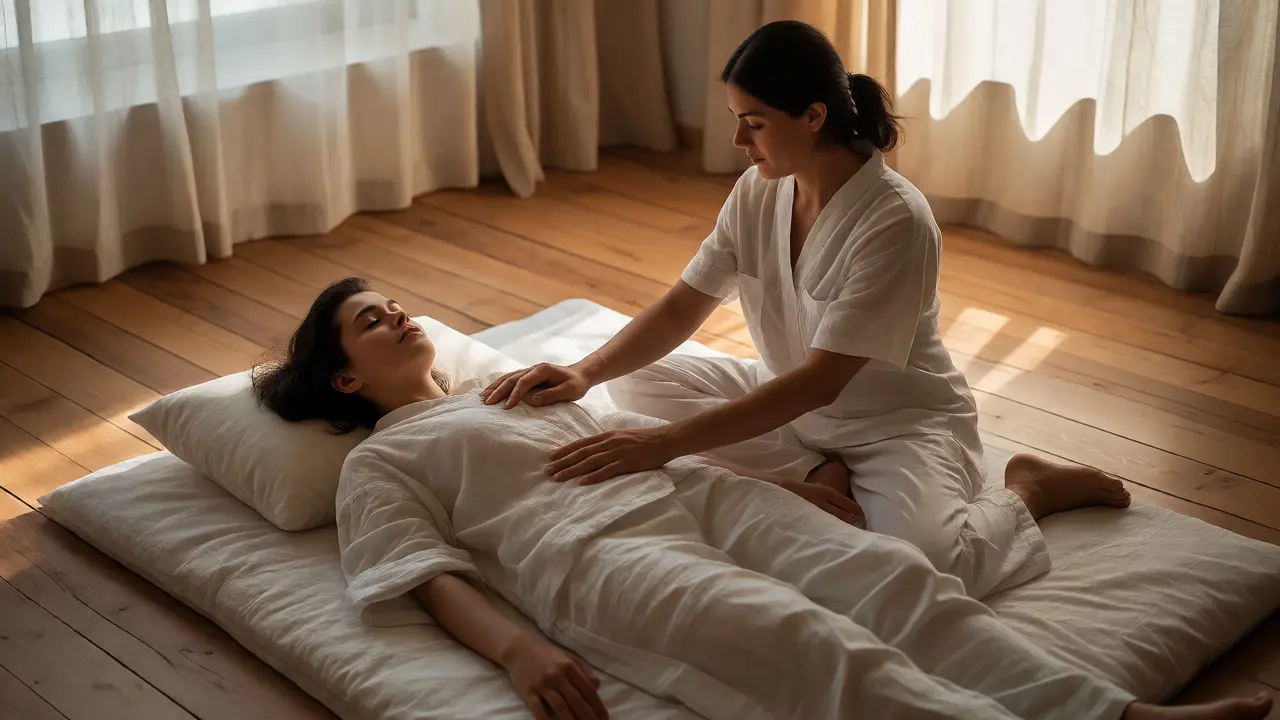
The Art and Science of Thai Massage: Techniques, Benefits, and What Really Happens on the Table
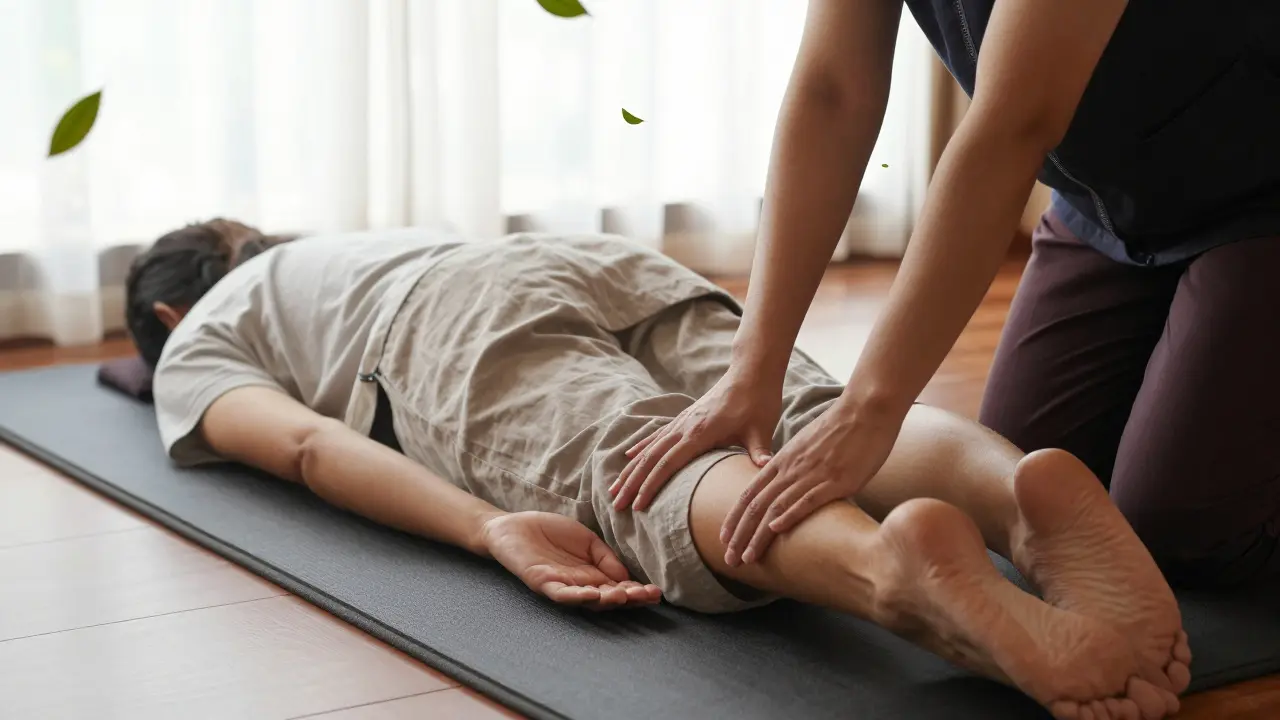
Thai massage isn’t just another spa treatment. It’s a 2,500-year-old healing system that blends acupressure, assisted yoga postures, and energy line work - all done fully clothed on a mat on the floor. Unlike Swedish or deep tissue massage, you don’t lie still. You’re moved, stretched, and pressed in ways that feel both intense and strangely calming. If you’ve ever walked out of a session feeling like you’ve been reset, you’re not imagining it. There’s real science behind why this works.
What Makes Thai Massage Different?
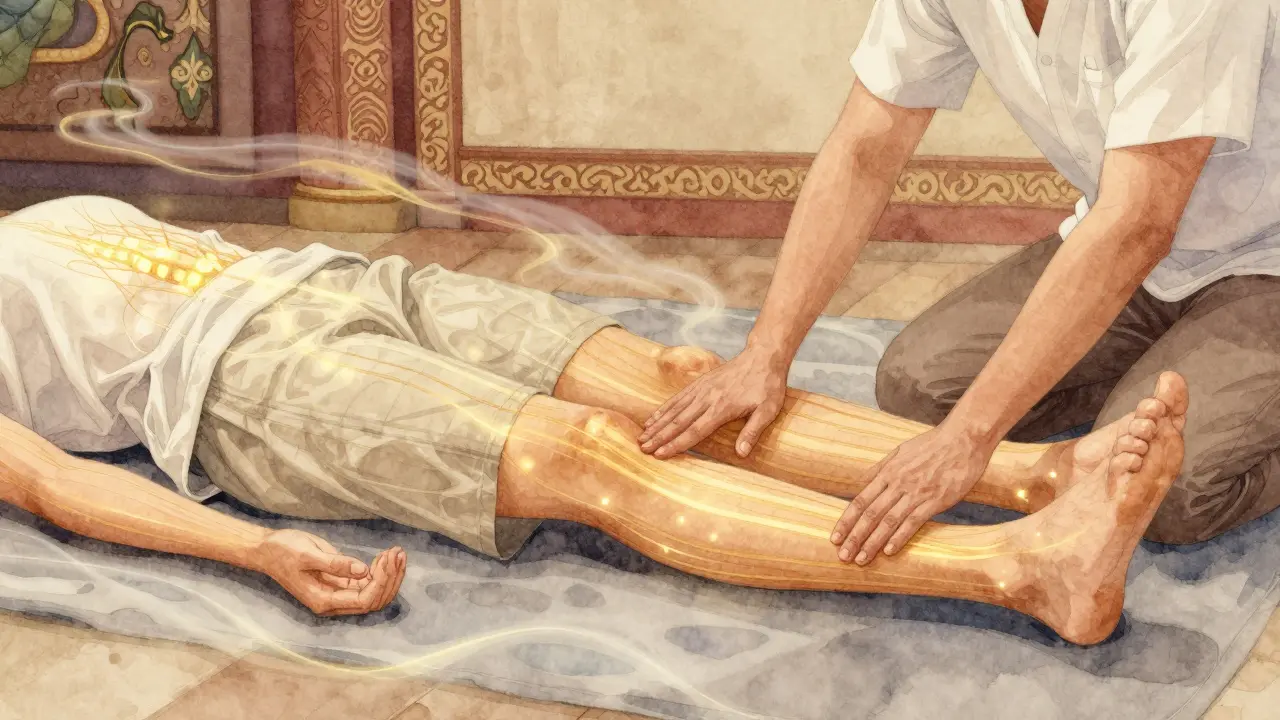
Most massage therapies focus on muscles. Thai massage targets the body’s energy lines - called sen lines - believed to carry life force, or prana. There are 10 primary sen lines, and practitioners apply pressure along these pathways using thumbs, palms, elbows, knees, and even feet. It’s not random. Each movement follows a precise sequence passed down through generations in Thailand.
Think of it like yoga you don’t have to do yourself. The therapist guides your body into stretches you might not be able to reach alone. A common sequence starts at the feet, moves up the legs, opens the hips, stretches the spine, and ends with gentle rocking to release tension. Sessions last 60 to 120 minutes and are done on a padded mat - no oils, no undressing.
It’s not just about flexibility. People who get regular Thai massage often report better sleep, reduced headaches, and less lower back pain. A 2023 study from Chiang Mai University tracked 150 participants over six months. Those who received weekly Thai massage showed a 38% reduction in chronic lower back pain compared to a control group receiving no treatment. The effect was strongest in people who sat for more than six hours a day.
The Science Behind the Pressure
Modern research is catching up to ancient practice. Thai massage isn’t magic - it’s physiology. The rhythmic compression and stretching stimulate the parasympathetic nervous system, which tells your body to relax. This lowers cortisol, slows your heart rate, and reduces muscle tension.
One key mechanism is the release of myofascial adhesions - the sticky, tight spots between muscles and connective tissue. These adhesions form from sitting too long, poor posture, or injury. Thai massage’s deep, sustained pressure helps break them up without causing bruising. Unlike deep tissue massage, which can feel aggressive, Thai massage uses body weight and leverage. The therapist doesn’t just push - they use their whole body as a tool.
Neurologically, the pressure activates mechanoreceptors in the skin and muscles. These send signals to the brain that override pain messages. It’s the same reason rubbing a bumped elbow helps. Thai massage just does it systematically across the whole body.
And yes - it affects circulation. A 2022 study in the Journal of Bodywork and Movement Therapies found that Thai massage increased blood flow to the limbs by 22% during sessions. That means more oxygen and nutrients reach tired muscles, and waste products like lactic acid get flushed out faster.
What to Expect During Your First Session
You’ll wear loose, comfortable clothing - think cotton pants and a T-shirt. No underwear changes, no oils, no music unless you ask. The room is warm, quiet, and often scented with natural herbs like lemongrass or kaffir lime.
The therapist will start by asking about injuries, surgeries, or conditions like high blood pressure or pregnancy. This isn’t just formality - Thai massage can be too intense for some. If you have a herniated disc, osteoporosis, or recent surgery, you need to tell them. A good practitioner will modify the session.
During the massage, you’ll be moved into positions like a seated forward fold, a gentle backbend, or a hip opener. Don’t worry if you can’t do these on your own. The therapist supports you. You might feel a deep ache - not sharp pain, but a strong, stretching sensation. It’s normal. If it turns into pain, say something. Good therapists adjust on the spot.
Some people laugh. Others cry. It’s not unusual. Thai massage unlocks emotional tension stored in the body. A woman in Brisbane told me she cried during her first session because she hadn’t realized how tight her shoulders were until they were released. She said it felt like a weight had been lifted - not just physically, but mentally.
Who Benefits Most?
Thai massage isn’t for everyone, but it’s powerful for specific groups:
- People with desk jobs: If you sit all day, your hips, hamstrings, and lower back get stiff. Thai massage opens those areas like nothing else.
- Athletes and active people: Runners, cyclists, and gym-goers use it for recovery. It improves range of motion without the soreness of foam rolling.
- People with chronic stress: The rhythmic pressure and breathing cues help calm an overactive nervous system.
- Those with mild arthritis: Gentle joint mobilization can reduce stiffness without aggravating inflammation.
It’s not recommended for people with deep vein thrombosis, severe osteoporosis, or recent fractures. If you’re pregnant, wait until after the first trimester and only go to a therapist trained in prenatal Thai massage.
How to Find a Qualified Practitioner
Not everyone calling themselves a Thai massage therapist knows what they’re doing. In Thailand, practitioners train for 2-5 years. In Australia, certification varies. Look for someone who:
- Has completed a certified Thai massage program (at least 100 hours of training)
- Can explain the sen lines and energy work, not just say "it’s relaxing"
- Asks about your health history before starting
- Uses traditional techniques, not just a mix of Swedish and Thai
Check if they’re registered with the Thai Traditional Medicine Association or the Australian Association of Massage Therapists. Avoid places that offer "Thai massage" as a 30-minute add-on - that’s not real Thai massage. It’s a watered-down version.
In Brisbane, clinics like Wat Pho Thai Massage and Chiang Mai Bodyworks have therapists trained in Chiang Mai. Ask about their teacher’s lineage. A good therapist can tell you where they learned - and why it matters.
What It Costs and How Often to Go
Prices in Australia range from $80 to $150 for a 60-minute session. Longer sessions (90-120 minutes) cost $120-$200. That’s more than a Swedish massage, but you’re getting more: movement, stretching, and energy work - not just rubbing.
How often? If you’re dealing with chronic pain or stress, once a week for 4-6 weeks helps reset your body. After that, every 2-4 weeks maintains the benefits. Athletes often go weekly during training seasons. For general wellness, once a month is enough to stay balanced.
Some insurance plans in Australia cover massage therapy under extras policies. Check if your provider includes "remedial massage" or "traditional Thai therapy." You might get 50-70% back.
Myths About Thai Massage
Let’s clear up some confusion:
- Myth: Thai massage is sexual. Truth: It’s a sacred healing tradition. Any sexual behavior is unethical and illegal. Reputable clinics have strict codes of conduct.
- Myth: You need to be flexible. Truth: You’re guided through stretches. The therapist adjusts to your body - not the other way around.
- Myth: It’s just a fancy stretch. Truth: The pressure points, breathing rhythm, and energy line work make it a full-body therapy, not a yoga class.
- Myth: It’s painful and you need to "endure" it. Truth: Discomfort is normal, pain is not. A good therapist works with your tolerance, not against it.
Thai massage was developed by Buddhist monks in Thailand as a form of healing. It’s spiritual in origin, but not religious. You don’t need to believe in energy lines to benefit from them - just like you don’t need to believe in acupuncture to feel its effects.
What Happens After Your Session
Don’t jump into your car and drive off. Drink water. Your body is flushing out metabolic waste. Avoid caffeine or heavy meals for an hour. You might feel sleepy, euphoric, or slightly dizzy - all normal. Some people feel sore the next day, like after a good workout. That fades in 24-48 hours.
Keep moving gently. Walk around. Do some light stretching. Avoid intense exercise or hot baths right after. Your body is still adjusting.
Many people report a lasting effect: better posture, deeper breathing, less tension in the jaw. One man in Brisbane said he stopped clenching his teeth at night after just three sessions. He didn’t even realize he was doing it until it stopped.
Thai massage doesn’t promise miracles. But if you’ve tried everything else - physio, chiropractic, foam rollers - and still feel stuck, this might be the missing piece. It’s not just touch. It’s movement, breath, pressure, and intention - all working together.
Is Thai massage painful?
It can feel intense, but it shouldn’t hurt. You’ll feel deep pressure and stretching, especially in tight areas like the hips or lower back. If you feel sharp pain, numbness, or tingling, tell your therapist immediately. A good practitioner adjusts pressure based on your feedback. Discomfort is normal; pain is not.
Do I need to be flexible to try Thai massage?
No. Thai massage is designed for people who aren’t flexible. The therapist moves your body for you, using their hands, elbows, and feet to guide you into stretches. You don’t need to do anything. Just relax and breathe. The goal is to help your body open up - not to show off your yoga skills.
Can Thai massage help with back pain?
Yes, especially for lower back pain caused by sitting, poor posture, or muscle tightness. Thai massage releases tension in the hips, hamstrings, and spine - all areas that contribute to back strain. A 2023 study found participants with chronic lower back pain reduced their pain levels by 38% after six weeks of weekly sessions.
How is Thai massage different from Swedish massage?
Swedish massage uses oils and focuses on relaxation through long strokes and kneading. Thai massage is done fully clothed on a mat, uses no oils, and involves active stretching, acupressure, and energy line work. It’s more like a guided yoga session with therapeutic pressure. Thai massage is more dynamic and structural; Swedish is more soothing and surface-level.
Is Thai massage safe during pregnancy?
It can be, but only after the first trimester and only with a therapist trained in prenatal Thai massage. Certain positions and pressure points are avoided. Always tell your therapist you’re pregnant before the session. Avoid deep abdominal pressure and intense hip openers. When done correctly, it can reduce swelling, improve sleep, and ease lower back strain.