Thai Massage for Post-Workout Recovery: How It Heals Muscles Faster
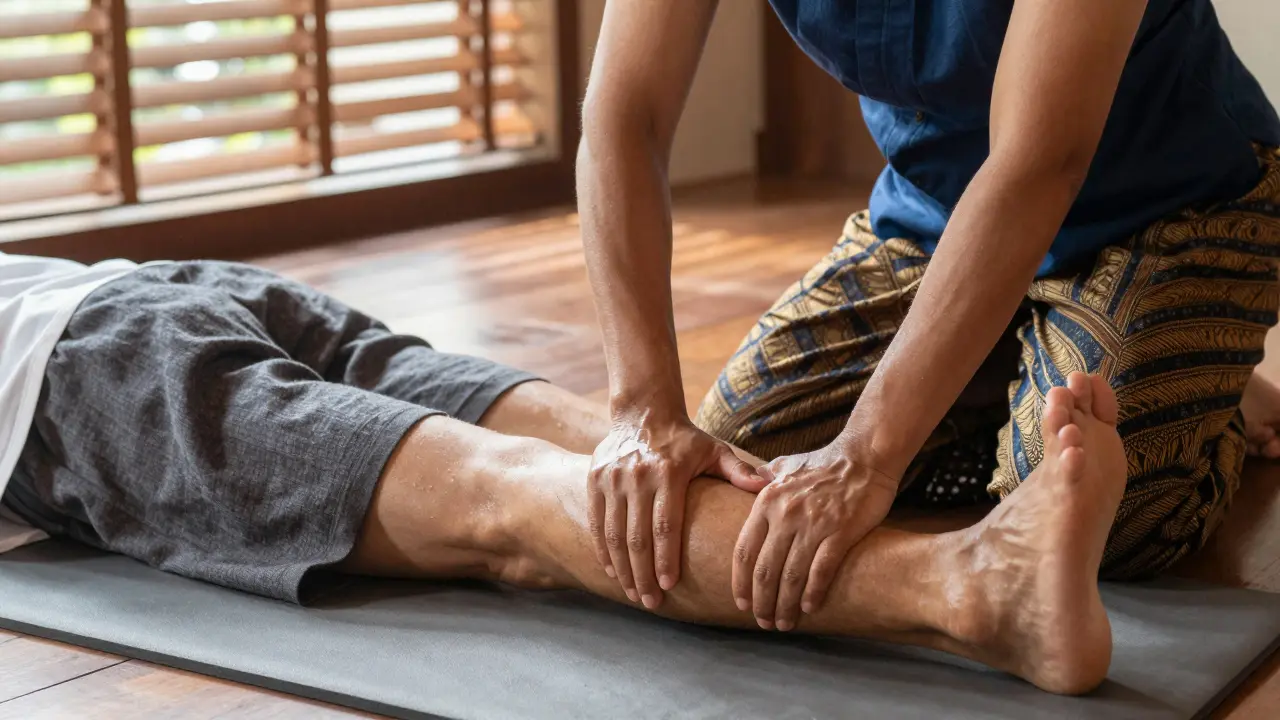
After a hard workout, your muscles feel tight, sore, and heavy. You’ve stretched, iced, and maybe even rolled out with a foam roller-but nothing seems to unlock the deep stiffness. That’s where Thai massage steps in. Unlike regular Swedish or deep tissue massage, Thai massage doesn’t just rub your skin. It pulls, stretches, and compresses your body like a living yoga session, waking up your muscles and resetting your nervous system in ways other therapies can’t match.
How Thai Massage Works on Recovering Muscles
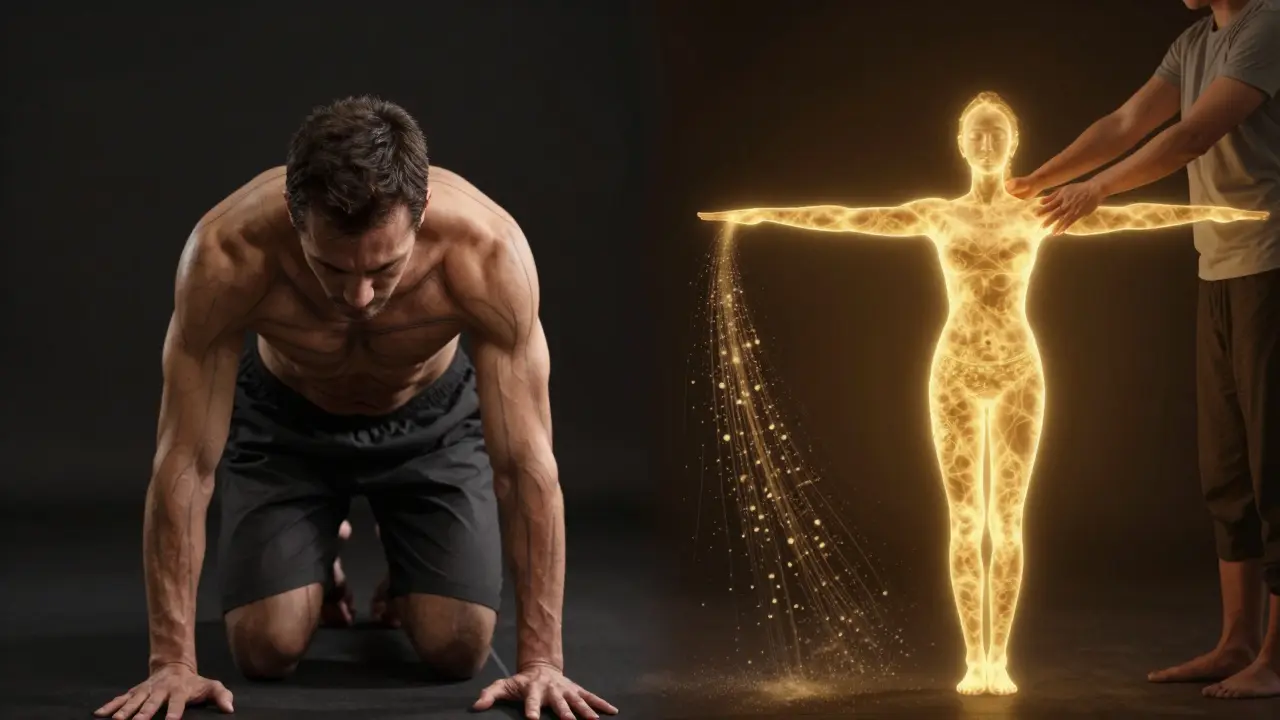
Thai massage combines acupressure, assisted yoga postures, and rhythmic compression. Practitioners use their hands, thumbs, elbows, knees, and feet to apply pressure along energy lines called sen lines. These aren’t just mystical concepts-they line up with major nerve pathways, muscle fascia, and blood vessels. When pressure is applied correctly, it triggers a cascade of physiological responses: blood flow increases, lactic acid flushes out, and muscle fibers release from chronic tension.
One 2023 study from Chiang Mai University tracked 68 athletes after intense strength sessions. Those who received Thai massage showed a 32% faster drop in creatine kinase (a marker of muscle damage) compared to those who only rested. Their perceived soreness dropped by nearly 40% within 24 hours. That’s not magic. It’s physics and biology working together.
Why It Beats Foam Rolling and Static Stretching
Foam rolling helps, but it’s passive. You press a cylinder against your quads and hope for the best. Static stretching pulls muscles gently-but if your nervous system is still in fight-or-flight mode from a tough workout, your muscles won’t fully relax. Thai massage bypasses that. The therapist’s body weight and precise timing override your brain’s protective tension signals. They don’t just stretch your hamstrings-they guide your entire pelvis into alignment, releasing tension from your lower back and glutes at the same time.
Think of it like rebooting a frozen computer. Foam rolling is clicking refresh. Thai massage is a full shutdown and restart.
The Real Benefits You’ll Feel
- Reduced muscle soreness-Delayed onset muscle soreness (DOMS) fades faster because circulation carries away metabolic waste.
- Better range of motion-After one session, most people report improved hip mobility and shoulder flexibility without even trying.
- Faster return to training-Elite athletes using Thai massage regularly report cutting recovery time by 2-3 days per week.
- Lower stress hormones-Cortisol levels drop after a session, which helps your body shift from repair mode to growth mode.
One CrossFit athlete from Austin, Texas, started getting Thai massage twice a week after hitting a plateau. She went from skipping leg day due to soreness to hitting personal records in squats within six weeks. Her coach didn’t change her program. She just changed how she recovered.
What Happens During a Session
You lie on a mat on the floor, fully clothed in loose, comfortable clothing. No oils, no undressing. The therapist starts at your feet and works upward, using rhythmic pressure along your legs, hips, back, shoulders, and arms. You’ll be pulled into forward bends, twisted gently, and compressed in ways that feel intense-but never painful. It’s like being stretched by someone who knows exactly how far you can go before your body says “stop.”
A typical session lasts 60 to 90 minutes. First 20 minutes focus on the lower body-calves, hamstrings, glutes. Then the therapist moves to your back and core, using their body weight to press into your spine and ribs. Finally, they work your arms and shoulders, often pulling your arms overhead in a controlled, flowing motion that opens up your chest and releases tension you didn’t even know you had.

When to Get It-And When to Skip It
Best time? Within 24 to 48 hours after a heavy leg day, HIIT session, or long run. That’s when inflammation peaks and muscles are most in need of circulation. Don’t wait until you’re so sore you can’t walk. Go before the stiffness locks in.
Avoid it if you have:
- An acute injury (sprained ankle, torn muscle)
- Recent surgery or open wounds
- Severe osteoporosis or blood clotting disorders
- High fever or active infection
If you’re unsure, talk to your physical therapist or doctor. Most Thai massage therapists will ask about injuries before starting-they’re trained to adapt.
How Often Should You Do It?
If you train hard 4-6 days a week, once a week is ideal. If you’re a weekend warrior, every two weeks keeps you moving without pain. Even once a month makes a difference if you’re consistent.
Some people think it’s a luxury. It’s not. It’s maintenance-like changing your car’s oil. You wouldn’t skip it for your vehicle. Don’t skip it for your body.
Thai Massage vs. Other Recovery Methods
| Method | Time Needed | Cost per Session | Best For | Limitations |
|---|---|---|---|---|
| Thai Massage | 60-90 min | $60-$120 | Deep muscle release, flexibility, nervous system reset | Requires trained therapist; not self-administered |
| Foam Rolling | 15-20 min | $20-$50 (one-time) | Self-care, surface tension | Can’t reach deep layers or joints |
| Static Stretching | 10-15 min | Free | Maintaining flexibility | Minimal impact on soreness or circulation |
| Cryotherapy | 3-5 min | $50-$80 | Reducing inflammation | Doesn’t improve mobility or muscle elasticity |
| Deep Tissue Massage | 60 min | $70-$110 | Chronic knots, localized pain | Less focus on full-body mobility |
Thai massage isn’t just another recovery tool. It’s the only one that combines mobility work, deep pressure, and nervous system regulation in one session. No other method does all three.
How to Find a Good Thai Massage Therapist
Not all Thai massage is created equal. Some places call it “Thai massage” but just do light stretching. Look for therapists trained in traditional Thai medicine, ideally certified by the Thai Traditional Medical Society or the Wat Po Temple in Bangkok. Ask:
- “Are you trained in the traditional Sen energy line system?”
- “Do you use your body weight, not just hands?”
- “Can you adapt pressure for post-workout recovery?”
Check reviews for words like “intense but therapeutic,” “felt looser after,” or “didn’t feel like I was being pushed too far.” Avoid places that offer “Thai massage” with oil or in a private room with dim lighting-that’s often a red flag for non-traditional or erotic services.
What to Do After Your Session
Drink water. Lots of it. Your body is flushing out toxins and needs hydration to keep the process going. Avoid alcohol or heavy meals for a few hours. Don’t jump into another intense workout the same day. Give your muscles 12-24 hours to integrate the changes.
Some people feel a little tired or even slightly dizzy after their first session. That’s normal. Your nervous system just reset. Rest. Let your body adjust.
Final Thought: Recovery Isn’t Optional
Training hard means nothing if you don’t recover well. You wouldn’t buy a high-end bike and never change the tires. Your body is the same. Thai massage isn’t a spa treat-it’s a performance tool. It’s what separates athletes who keep improving from those who burn out.
If you’re serious about getting stronger, moving better, and staying injury-free, stop treating recovery as an afterthought. Make Thai massage part of your routine. Your next workout will thank you.
Is Thai massage painful?
It should feel intense, not painful. A good therapist adjusts pressure based on your feedback. If you’re wincing or holding your breath, speak up. The goal is to release tension, not cause injury. Most people describe it as a "good hurt"-like when a deep stretch finally unlocks.
Can I do Thai massage on myself?
You can’t fully replicate it alone. Thai massage relies on another person using their body weight to apply precise pressure and leverage. You can mimic some stretches with straps or blocks, but you won’t get the full neural reset or deep compression. It’s like trying to stretch your own spine with a yoga strap-it helps, but it’s not the same as having someone guide you into alignment.
How long do the benefits last?
You’ll feel looser right after, but the real recovery benefits build over 2-3 days. Muscle soreness drops, mobility improves, and energy returns. If you get it weekly, the effects compound. After a month, many people say they feel like their body is functioning at 80% efficiency instead of 60%.
Does Thai massage help with joint pain?
Yes-especially for hips, shoulders, and knees. The stretching and compression improve joint fluid circulation and reduce stiffness. It won’t fix arthritis or structural damage, but it can significantly reduce discomfort and improve movement quality in overworked joints.
Do I need to be flexible to get Thai massage?
No. In fact, most people who need it the most are the least flexible. Therapists work with your current range of motion. You don’t have to touch your toes. You just have to show up.