Autoeroticism Massage: The Ultimate Guide to Self-Exploration and Sensual Awareness
Most people think of massage as something you get from someone else. You lie down, close your eyes, and let a therapist work out the knots in your back. But what if the most transformative massage you ever experience is the one you give yourself? Autoeroticism massage is a practice of self-directed tactile stimulation that combines physical relaxation with sexual exploration and emotional intimacy. It’s not just about reaching a climax; it’s about reconnecting with your body in a way that feels safe, intentional, and deeply personal.
In a world that often treats our bodies as machines or objects for others’ pleasure, taking time to explore your own sensations can be radical. This guide isn’t about performance or pornographic fantasies. It’s about presence. It’s about learning where your tension lives, how your skin responds to different pressures, and what kind of touch makes you feel alive. Whether you’re single, partnered, or somewhere in between, this practice offers a path to greater body confidence and sexual health.
Understanding the Roots of Autoerotic Touch
To understand why this works, we have to look at the biology of touch. Your skin is your largest sensory organ. It’s covered in millions of nerve endings that send signals to your brain about pressure, temperature, and texture. When you engage in sensual self-massage, you are activating these neural pathways deliberately to create a feedback loop of pleasure and relaxation.
Psychologists often refer to this as "interoception"-the ability to sense what’s happening inside your body. Many of us have poor interoceptive awareness because we spend our days staring at screens or pushing through stress. By slowing down and focusing on touch, you retrain your brain to listen to your body again. This isn’t new age fluff; it’s neuroscience. Studies in somatic psychology show that mindful touch reduces cortisol levels (the stress hormone) and increases oxytocin (the bonding hormone). You are literally healing yourself by touching yourself with care.
Historically, autoerotic practices have been part of many cultures. In ancient India, Tantra teachings emphasized the importance of knowing one’s own energy centers before sharing them with a partner. In modern Western therapy, techniques like sensate focus are used to help couples overcome sexual dysfunction. The core idea is always the same: you cannot give what you do not know you have. If you don’t know what feels good to you, how can you communicate that to anyone else?
Setting the Stage: Environment Matters More Than You Think
You wouldn’t try to meditate in a busy airport terminal. Similarly, trying to connect with your body while rushing or distracted rarely works. The environment sets the tone for your nervous system. If your surroundings feel chaotic, your body stays in fight-or-flight mode, making deep relaxation impossible.
Start with lighting. Harsh overhead lights signal "work mode." Dim the lights or use candles. Candlelight creates soft shadows that make your body look softer and more inviting to your own eyes. Temperature is next. Most people find that a slightly warm room helps muscles relax. If your feet get cold, put on socks. Cold extremities pull your focus away from your torso and head.
Scent plays a huge role too. Smell is directly linked to the limbic system, which controls emotion and memory. A light sandalwood or lavender scent can trigger calmness. Avoid heavy perfumes that might overwhelm your senses. You want subtle cues, not distractions.
- Lighting: Use dimmers, lamps, or candles to soften the visual field.
- Sound: Play low-frequency ambient music or white noise to mask household sounds.
- Temperature: Keep the room around 72-74°F (22-23°C) for optimal muscle relaxation.
- Privacy: Lock the door. Put your phone in another room. Set a timer if you need to ensure you won’t be interrupted.
The Toolkit: Oils, Tools, and Textures
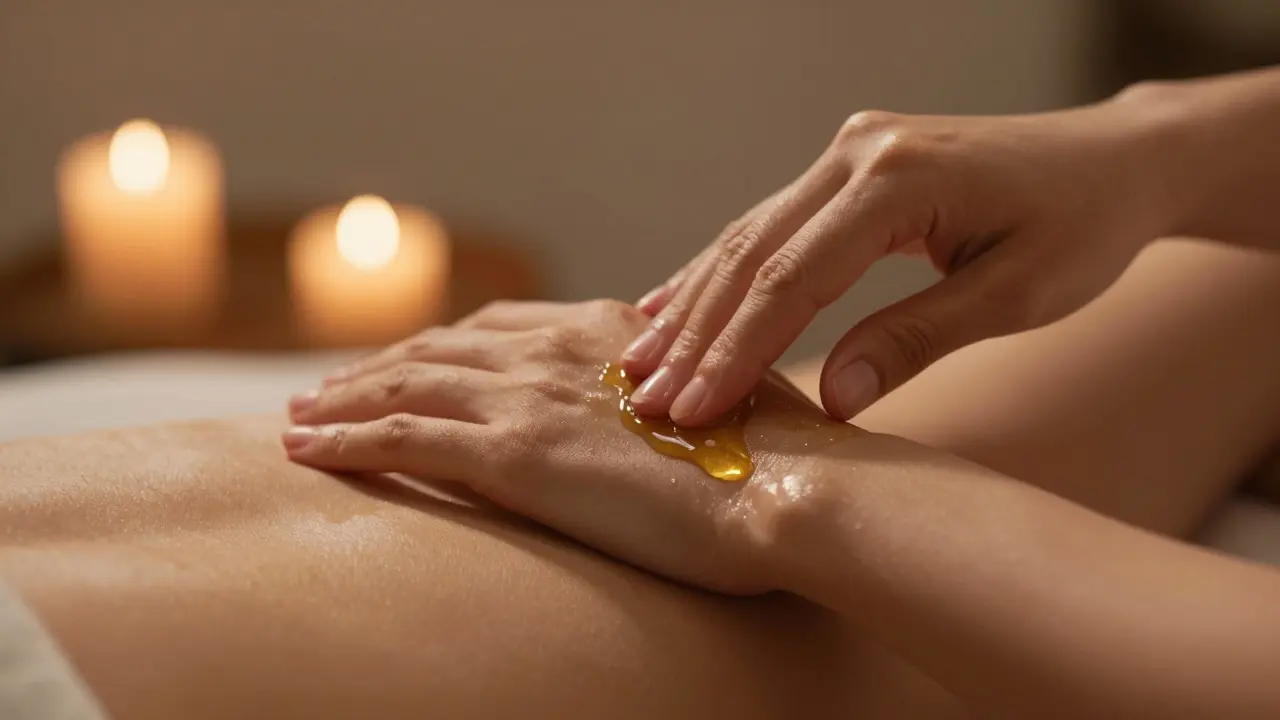
Your hands are the primary tool, but they aren’t the only ones. Different textures stimulate different nerve receptors. Dry skin can feel rough and create friction that pulls you out of the moment. Using a lubricant or oil changes everything. It allows for long, gliding strokes that feel luxurious rather than abrasive.
Choose an oil based on your needs. Coconut oil is natural, smells good, and absorbs slowly, making it great for longer sessions. Jojoba oil closely mimics the skin’s natural sebum, so it’s less likely to clog pores. Silicone-based lubricants last longer and are smoother, but they can stain sheets, so use caution. Avoid water-based lubes for massage unless you plan to shower immediately after, as they dry out quickly.
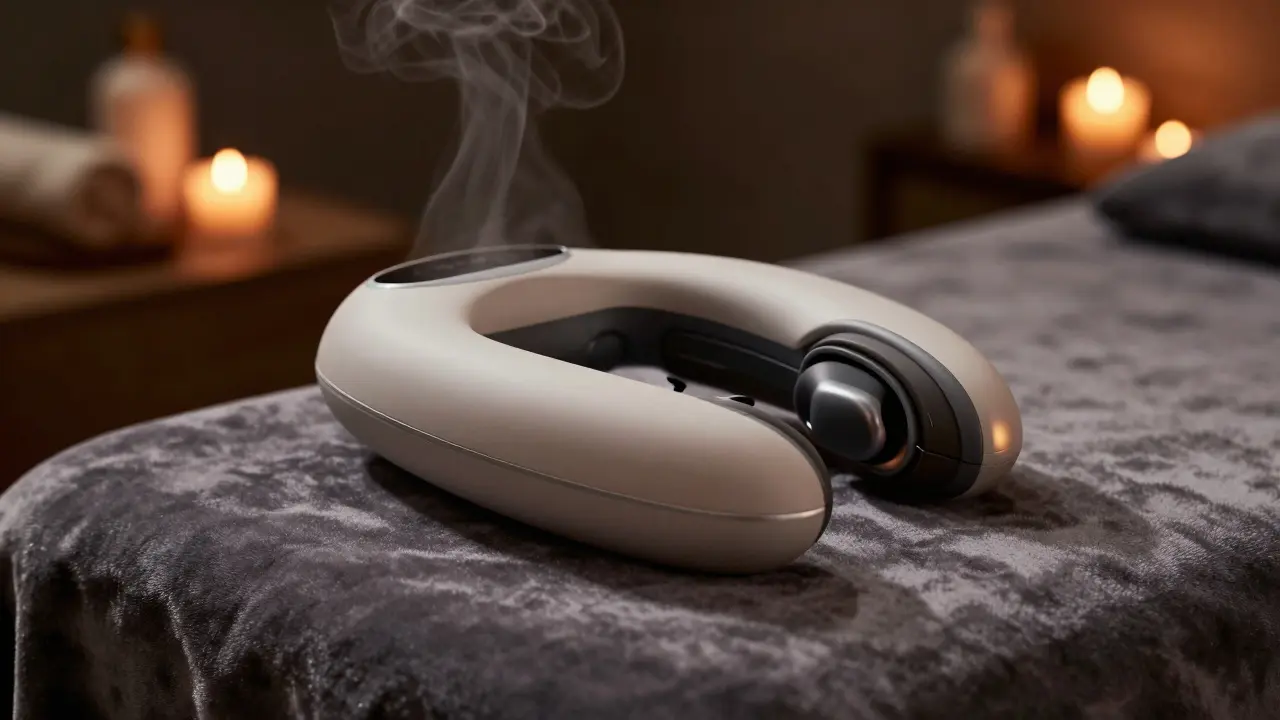
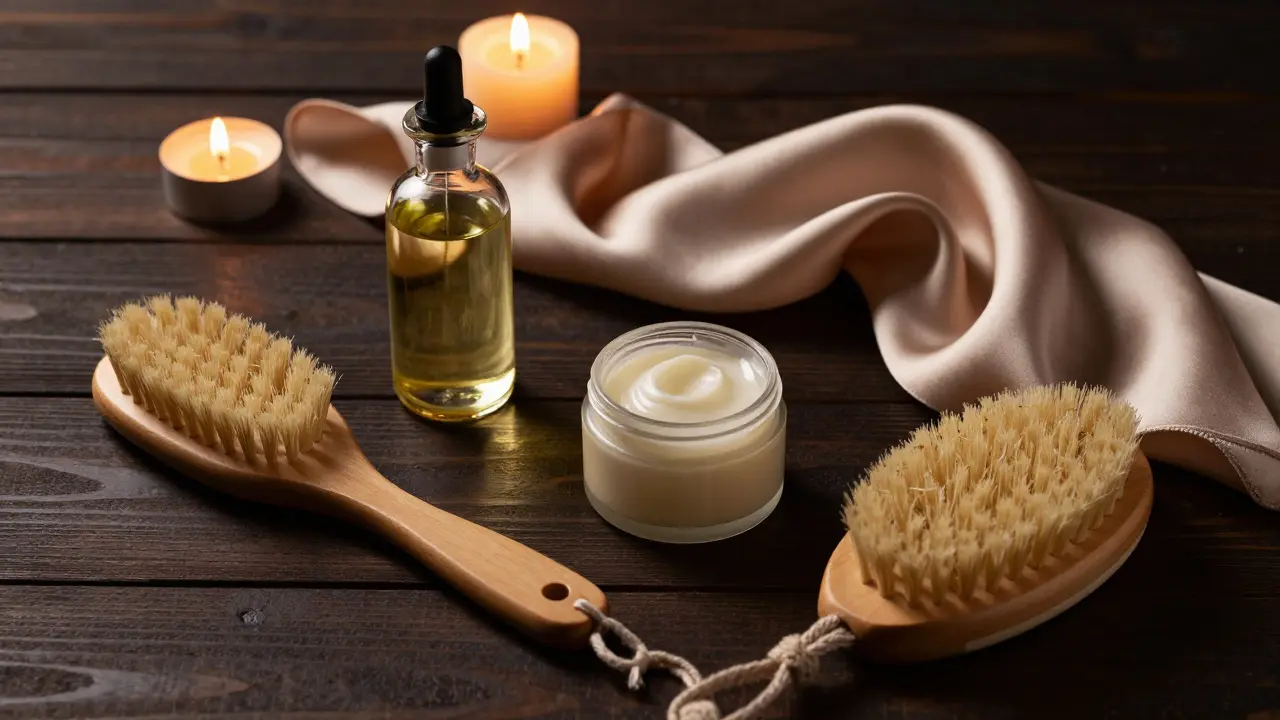
Beyond oils, consider adding tools. A massage brush with soft bristles designed to stimulate blood flow and awaken the skin without causing irritation can be surprisingly effective. Brushing your arms or legs lightly before applying oil creates a tingling sensation that heightens sensitivity. Feather brushes or silk scarves can also introduce a lighter, teasing touch that contrasts with the warmth of your palms.
| Medium | Absorption Rate | Best For | Drawbacks |
|---|---|---|---|
| Coconut Oil | Slow | Long sessions, sensitive skin | Can stain fabrics, solidifies in cold temps |
| Jojoba Oil | Medium | Daily use, acne-prone skin | Slightly more expensive |
| Silicone Lube | None (stays on surface) | High-slack movements, extended glide | Stains sheets, hard to wash off |
| Body Butter | Very Slow | Deep hydration, post-shower | Heavy, can feel greasy |
Step-by-Step: A Journey Through the Body
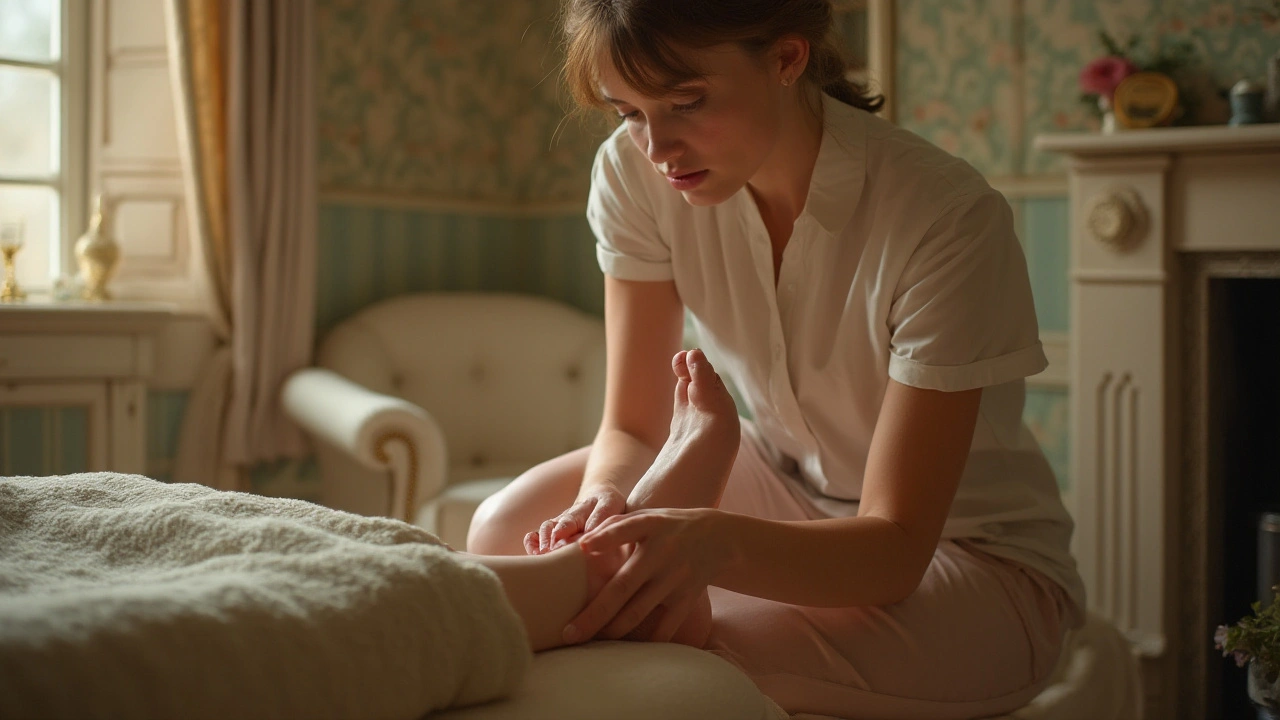
There is no "right" way to do this, but structure can help beginners who feel lost. Start from the bottom up. This follows the natural flow of lymphatic drainage and keeps your heart rate steady. Begin with your feet. They carry a lot of tension from walking all day. Massage your arches, toes, and heels with firm pressure. Notice any hot spots or tender areas.
Move to your calves and thighs. Use long, sweeping strokes from the ankle up to the knee, and from the foot up to the hip. This direction supports circulation. As you move higher, pay attention to your inner thighs. This area is often neglected but is rich in nerve endings. Use gentle, circular motions here. Don’t rush. Spend five minutes just on your legs if you need to.
Next, focus on your torso. Your abdomen holds a lot of emotional tension. Place your hands flat on your stomach and breathe into them. Feel your belly rise and fall under your palms. Then, use small circles around your navel. Move outward toward your ribs. Finally, trace the line of your spine with your fingertips. Press gently along the vertebrae to release tight muscles.
When you reach your breasts or chest, treat them with reverence. These areas are highly sensitive. Use the pads of your fingers, not your nails. Trace the outline of your breast, then move inward. Explore the nipples with light touches, varying the speed and pressure. Notice how your breath changes. Does it shallow out? Deepen? Let your hand follow your breath.
Finally, approach your genitals. This is where many people rush. Instead, slow down. Use oil to reduce friction. Explore every part of your anatomy with curiosity, not goal-oriented urgency. Touch the labia, clitoris, scrotum, or penis with varying degrees of pressure. Ask yourself: What feels best right now? Is it fast or slow? Firm or feather-light? There is no wrong answer. Your body knows what it wants.
Mindfulness and Mental Connection
The physical act is only half the equation. The mental state determines whether this is a chore or a sanctuary. Mindfulness means staying present. If your mind wanders to your to-do list, gently bring it back to the sensation of oil on your skin. If you judge your body shape, acknowledge the thought and let it pass. This is not a time for criticism.
Use visualization to deepen the experience. Imagine the oil carrying warmth into your cells. Picture tension melting away like ice in sunlight. Some people find it helpful to visualize a partner loving them, but that’s optional. The goal is self-love, not simulation of another person. You are enough. Your body is worthy of attention simply because it exists.
If you struggle with body image, start small. Maybe you only massage your hands or face. That’s fine. Build trust gradually. Over time, as you become more comfortable, you’ll expand the areas you explore. Healing isn’t linear. Be patient with yourself.

Common Pitfalls and How to Avoid Them
One common mistake is treating autoerotic massage like masturbation with extra steps. If you’re focused solely on orgasm, you might miss the deeper benefits. Try separating the two. Have some sessions where orgasm is off the table. Focus purely on sensation. You’ll often find that when you remove the pressure to perform, pleasure becomes more intense and accessible.
Another pitfall is inconsistency. Doing this once a month won’t build the neural pathways needed for lasting change. Aim for regularity. Even ten minutes a few times a week can make a difference. Treat it like brushing your teeth-a basic hygiene practice for your soul.
Don’t ignore discomfort. If something hurts, stop. Pain is a signal, not a challenge. Adjust your pressure or technique. Listen to your body’s feedback. It’s smarter than you think.
Integrating Into Your Wellness Routine
This practice doesn’t have to replace other forms of self-care. It complements them. Pair it with yoga, meditation, or journaling. After a session, write down what you noticed. Did you discover a new erogenous zone? Did you realize you were holding tension in your jaw? Journaling helps consolidate insights.
If you’re in a relationship, share what you learn. You don’t have to invite your partner into every session, but you can communicate your preferences better. "I love slow strokes on my back" or "I need more pressure on my shoulders" are clear, actionable requests that improve intimacy.
Is autoeroticism massage the same as masturbation?
Not exactly. While both involve self-touch, masturbation is typically goal-oriented, focusing on achieving orgasm. Autoeroticism massage emphasizes mindfulness, full-body connection, and sensory exploration without necessarily aiming for climax. It’s more about the journey than the destination.
How often should I practice self-massage?
Frequency depends on your schedule and goals. For beginners, starting with 10-15 minutes twice a week is manageable. As you become more comfortable, you might increase to daily short sessions. Consistency matters more than duration.
What if I feel awkward or guilty?
These feelings are normal, especially if you’ve been taught that self-pleasure is shameful. Acknowledge the guilt without judging it. Remind yourself that caring for your body is healthy and natural. Over time, as you associate the practice with relaxation and joy, the guilt will fade.
Can this help with anxiety or stress?
Yes. Mindful touch activates the parasympathetic nervous system, which counters the stress response. Regular practice can lower baseline anxiety levels and improve sleep quality by promoting deeper relaxation.
Do I need special equipment?
No. Your hands and a simple oil are enough to start. Tools like brushes or feathers can enhance the experience later, but they are not required. The most important ingredient is your attention.