Trigger Point Massage: The Ultimate Guide to Pain Relief
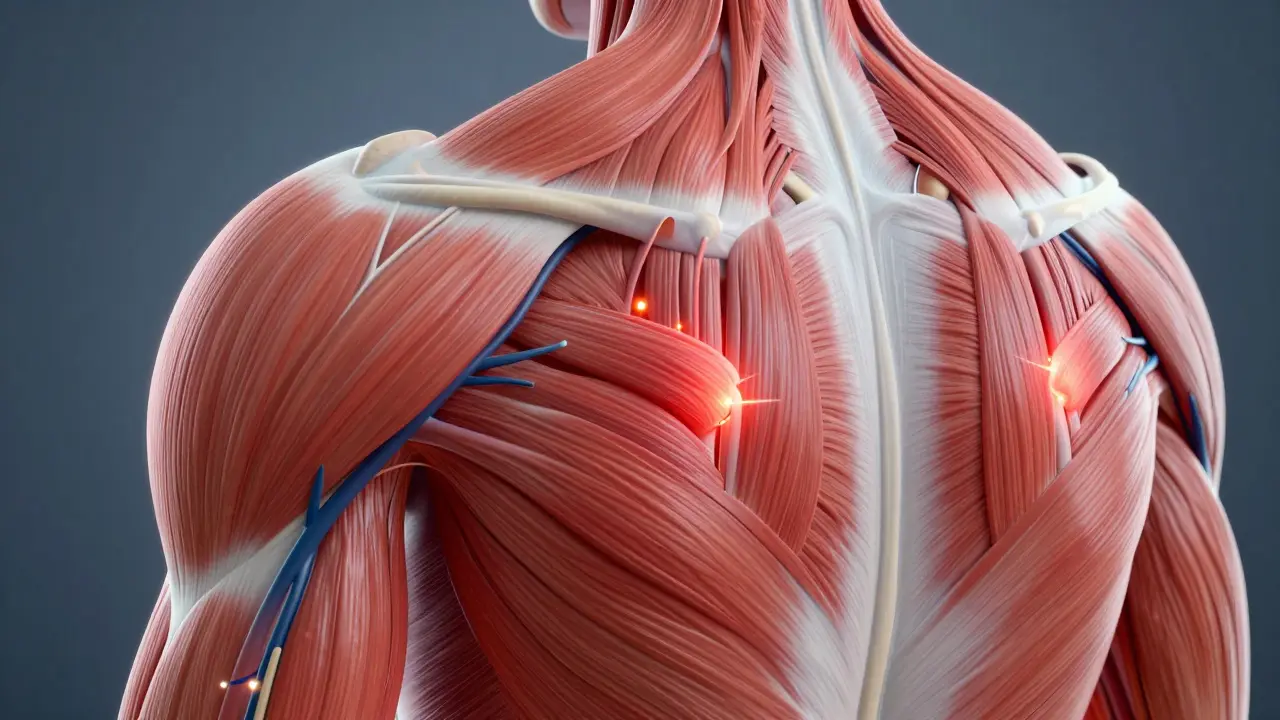
That sharp, nagging ache in your shoulder blade that refuses to go away? Or maybe it’s the stiff neck you wake up with every morning. Chances are, you’re dealing with a trigger point, which is a hyperirritable spot within a taut band of skeletal muscle. It feels like a knot, but it’s more than just tightness. It’s a specific physiological malfunction where muscle fibers contract and stay contracted, cutting off blood flow and creating a cycle of pain.
Standard relaxation massage often misses these spots entirely. You need targeted pressure. This guide breaks down exactly what trigger points are, how to find them, and how to use trigger point massage, also known as myofascial release, to deactivate them and get real relief.
What Actually Happens Inside a Trigger Point?
To fix the problem, you have to understand the mechanism. Think of a muscle fiber like a rubber band. When it contracts normally, it shortens and then relaxes. But in a trigger point, the sarcomeres-the tiny units inside the muscle fiber-contract and lock up. They can’t let go.
This creates a local energy crisis. Because the muscle is constantly contracted, it demands more oxygen and glucose. However, the sustained contraction squeezes the local capillaries, restricting blood flow. The result? Ischemia (lack of blood flow) leads to the buildup of metabolic waste products like lactic acid and inflammatory substances. These chemicals irritate nearby nerve endings, sending pain signals to your brain.
Here is the tricky part: the pain doesn’t always happen where the knot is. This is called referred pain, which is pain perceived at a location other than the site of the painful stimulus. A trigger point in your upper trapezius muscle might cause a headache behind your eye. A knot in your glutes can mimic sciatica, shooting pain down your leg. Understanding this map is crucial for effective treatment.
Identifying Your Problem Areas
You don’t need an MRI to find a trigger point. You can usually feel them yourself. Here is how to distinguish a true trigger point from general soreness:
- Taut Band: When you pinch the muscle between your fingers, it should feel soft and pliable. A trigger point feels like a thick, tight cord or rope running through the tissue.
- Local Twitch Response: If you flick or snap the taut band with your finger, the muscle might jump or twitch under your skin. This is a classic sign of a hyperactive motor endplate.
- Reproduction of Pain: Pressing firmly on the spot reproduces the exact pain you’ve been feeling, or triggers that familiar referred pain pattern elsewhere in your body.
- Sensitivity: The area is tender to touch. It hurts more than surrounding healthy tissue when pressed with moderate force.
Common culprits include the suboccipital muscles (base of the skull), the levator scapulae (side of the neck), and the piriformis (deep in the buttock). If you sit at a desk all day, check your pectorals (chest) and upper traps. If you drive long distances, look at your hip flexors.

How to Perform Effective Trigger Point Massage
Most people make the mistake of rubbing the surface of the skin. That does nothing for the deep muscle fibers. You need static compression. Here is the step-by-step process for deactivating a trigger point using your hands or a tool.
- Locate the Spot: Use your thumb or a massage tool to find the most tender point within the taut band. Be precise. Hitting the bone or healthy muscle won’t help.
- Apply Steady Pressure: Press into the point. The intensity should be high-somewhere between a 7 and 8 on a pain scale of 10. It should feel "good hurt," not sharp or stabbing. Sharp pain means you are damaging tissue; dull, achy pressure means you are working the trigger point.
- Hold and Wait: This is the critical step. Do not rub. Hold the pressure steady for 30 to 90 seconds. During this time, the muscle will likely start to relax and soften under your hand. You may feel the heat increase in the area as blood flow returns.
- Release Slowly: Ease off the pressure gradually. Don’t pull away quickly.
- Stretch the Muscle: Immediately after releasing, gently stretch the affected muscle. This helps elongate the fibers that were shortened by the contraction. For example, if you treated your chest, do a doorway stretch. If you treated your neck, gently tilt your head away from the side.
If you are using a massage ball, such as a lacrosse ball or tennis ball, you can lean against a wall. Place the ball between your back and the wall, positioning it over the trigger point. Lean in until you hit the sweet spot. Let gravity do the work. Roll slightly to find the most tender point, then hold still. Never roll aggressively over a trigger point; rolling spreads the inflammation rather than resolving it.
Tools of the Trade
While your thumbs are free and effective, they can get tired. Using tools allows you to apply deeper, more consistent pressure without straining your own hands. Here is a comparison of common tools:
| Tool | Best For | Pressure Level | Pros | Cons |
|---|---|---|---|---|
| Foam Roller | Large muscle groups (back, quads) | Low to Medium | Covers large areas, affordable | Lacks precision for small knots |
| Lacrosse Ball | Small, deep muscles (glutes, feet) | High | Precise, durable, intense pressure | Can be too painful for beginners |
| Tennis Ball | Moderate sensitivity areas (upper back) | Medium | Softer, easier to control | Compresses easily, less depth |
| Theragun / Percussive Massager | Rapid deactivation, warm-up | Variable | Fast, reduces fatigue quickly | Noisy, expensive, can bruise if misused |
If you choose a percussive massager, keep the attachment moving slowly over the trigger point rather than holding it in one place for too long, as the vibration can sometimes aggravate nerves if applied statically for extended periods.
Preventing Trigger Points from Returning
Massage treats the symptom, but lifestyle causes the disease. If you treat a knot in your neck caused by looking down at your phone for four hours a day, it will come back tomorrow. You must address the root cause.
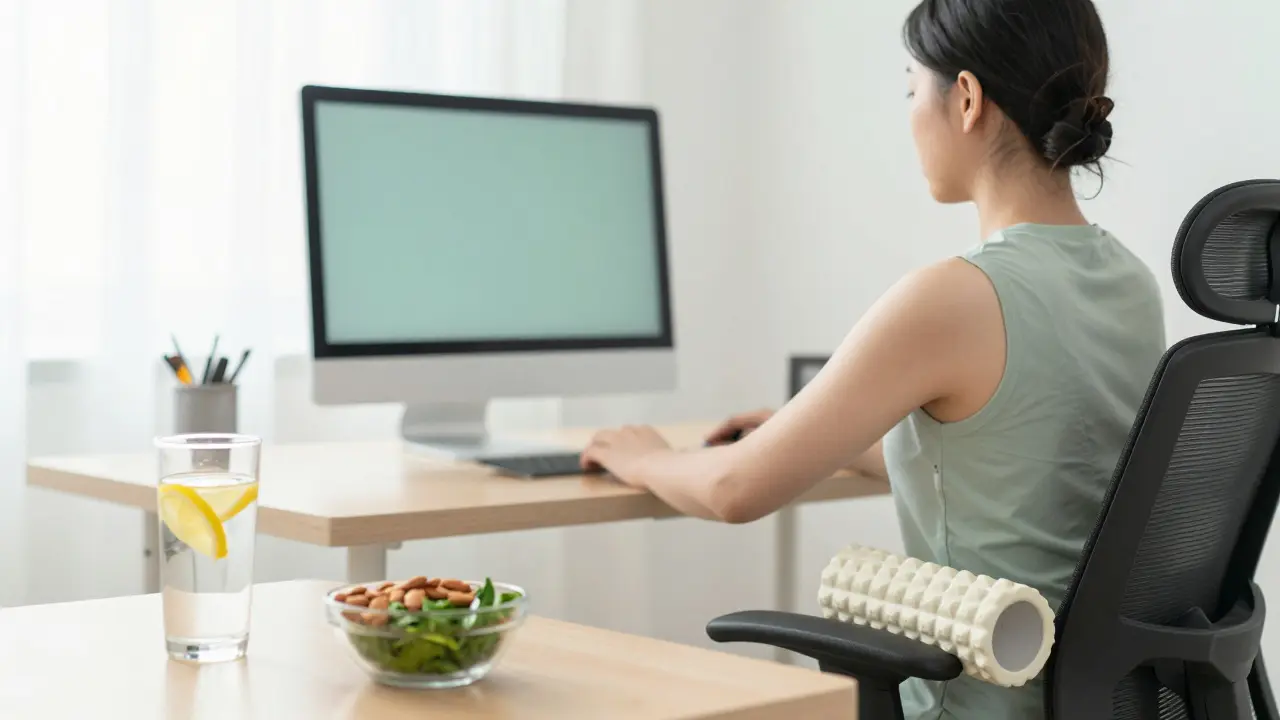
Posture Correction: Set up an ergonomic workspace. Your monitor should be at eye level so your neck stays neutral. Your keyboard should allow your elbows to rest at 90 degrees. Avoid "text neck" by raising your phone to eye level instead of dropping your chin to your chest.
Hydration: Muscles are made of water. Dehydrated muscles are more prone to cramping and developing trigger points. Aim for at least 2-3 liters of water daily, more if you exercise.
Electrolyte Balance: Magnesium and potassium are essential for muscle relaxation. Deficiencies in these minerals can lead to chronic tension. Consider adding leafy greens, nuts, and bananas to your diet, or consult a doctor about magnesium supplementation.
Movement Variety: Static positions are the enemy. Whether you are sitting, standing, or driving, change your position every 30 minutes. Simple micro-stretches can prevent the muscles from locking up in the first place.
When to See a Professional
Self-care is powerful, but there are limits. You should seek professional help if:
- The pain is severe, sudden, or accompanied by swelling or redness.
- You experience numbness, tingling, or weakness in your limbs, which could indicate nerve compression.
- Self-treatment provides no relief after two weeks.
- The pain interferes with sleep or daily activities significantly.
A licensed massage therapist specializing in clinical massage or myofascial release can identify complex patterns of trigger points that refer pain across multiple regions. They can also combine manual therapy with dry needling-a technique where thin needles are inserted into the trigger point to force a release-which is highly effective for stubborn cases.
How long does it take for a trigger point to go away?
With consistent treatment, acute trigger points can resolve in 1 to 3 days. Chronic trigger points, which have been present for months or years, may take several weeks of regular self-massage and posture correction to fully deactivate. Consistency is key; treating a knot once a month is rarely enough.
Does trigger point massage hurt?
It should be uncomfortable, but not excruciating. The ideal sensation is a "good hurt"-a deep, satisfying ache. If the pain is sharp, shooting, or causes you to flinch, you are applying too much pressure or hitting a nerve. Reduce the intensity immediately.
Can I use heat before trigger point massage?
Yes. Applying heat for 10-15 minutes before massage increases blood flow and makes the muscle tissue more pliable. This allows you to apply pressure more effectively and reduces the likelihood of causing additional irritation. Ice is generally better used after intense treatment if there is inflammation.
What is the difference between a knot and a trigger point?
In casual conversation, they are used interchangeably. Technically, a "knot" is a lay term for a palpable lump in the muscle. A "trigger point" is the clinical term for a hyperirritable spot that refers pain to other areas. All trigger points feel like knots, but not all knots are active trigger points causing referred pain.
Should I stretch before or after treating a trigger point?
Always stretch after. Stretching a cold, contracted muscle can cause it to guard further and tighten up as a protective mechanism. First, use pressure to deactivate the trigger point and restore blood flow. Once the muscle has relaxed, gentle stretching helps maintain the new, longer length of the muscle fibers.