The Rungu: Its Origins and Significance
The Rungu is a traditional wooden club used by the Maasai and other East African communities, often carved from dense hardwood and designed for both hunting and ceremonial use. Also known as rungu stick, it’s more than just a weapon - it’s a symbol of identity, authority, and heritage.
What the Rungu Actually Is
A rungu is typically 12 to 20 inches long, with a thick, rounded head at one end and a tapered handle. The head is often slightly heavier than the shaft, giving it momentum when swung. Most are made from acacia, mukwa, or ebony wood - materials chosen for their durability and density. Some feature carved patterns along the handle, while others are smooth, polished by years of use.
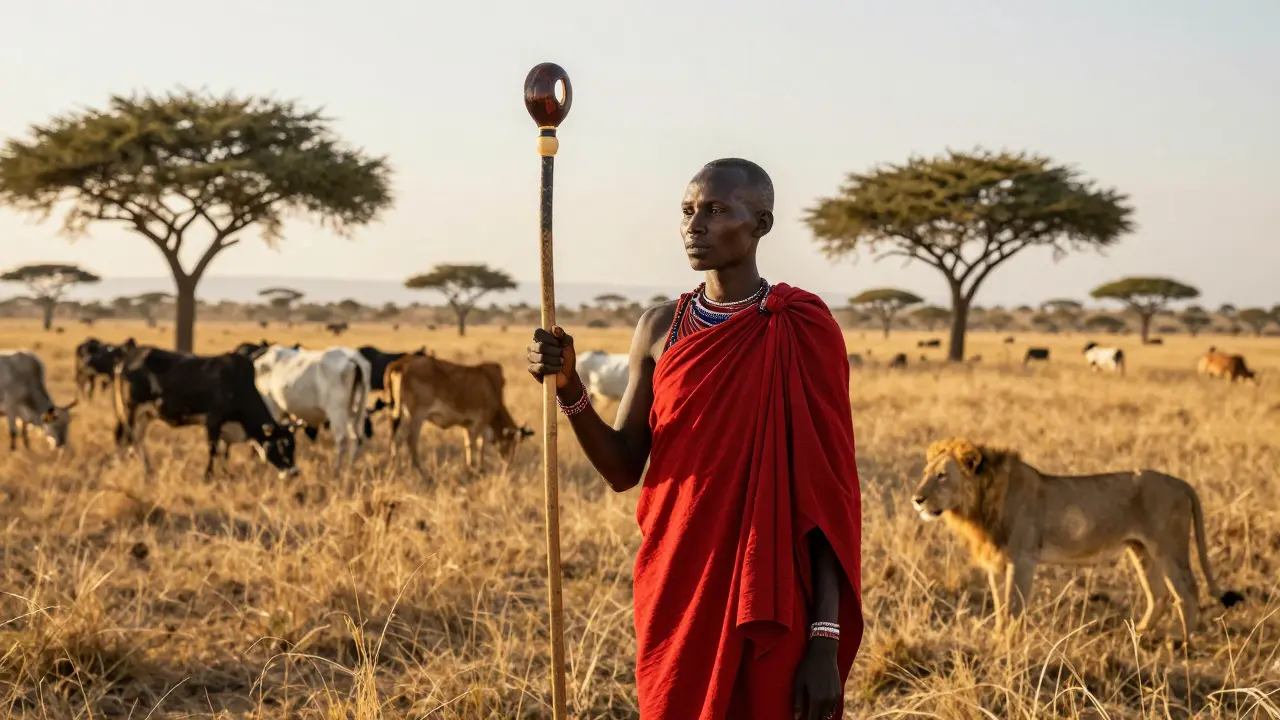
It’s not a weapon you’d find in a museum behind glass. In many rural villages in Kenya and Tanzania, the rungu is still carried daily - not for violence, but as a tool. It’s used to herd cattle, fend off predators like lions or hyenas, and even as a walking stick on long treks across the savanna.
Where It Came From
The rungu’s origins trace back centuries, long before colonial borders divided East Africa. It emerged from the practical needs of pastoralist communities, especially the Maasai, who rely on livestock for survival. In a landscape where lions stalk at dusk and cattle are the primary source of wealth, having a reliable, hand-held defense tool was essential.
Unlike spears or bows, the rungu doesn’t require complex training. A child can learn to swing it effectively by age six. Its simplicity made it widespread. Other groups like the Kikuyu, Samburu, and Turkana developed their own versions, but the Maasai version became the most recognized - partly because of their visibility in early European travel writing and later in wildlife documentaries.
There’s no written record of its invention. It evolved through trial and error. A stick that could knock out a hyena without breaking? That became the standard. Over time, the shape stabilized: a thick, rounded head for impact, a grip that fits the palm snugly, and a length that balances power with control.
More Than Just a Weapon
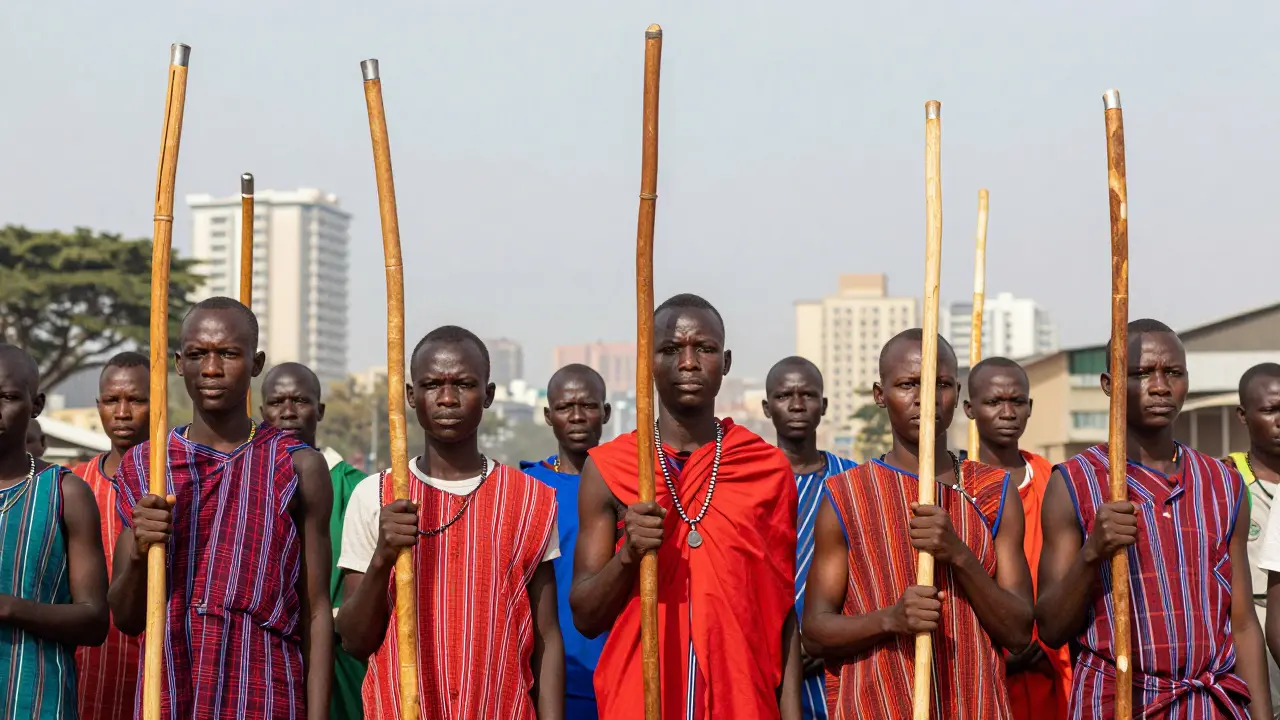
Among the Maasai, the rungu is tied to rites of passage. Young warriors, or morans, are given their first rungu during initiation. It’s not handed to them - it’s presented in a ceremony, often by a father or elder. The act symbolizes the transition from boyhood to protector of the community.
It’s also a sign of status. A well-carved rungu with intricate patterns can indicate a man’s wealth or skill. Some are passed down through generations. A rungu with a cracked head? That’s not discarded. It’s repaired, sometimes with metal bands or resin, and kept as a family heirloom.
In modern times, the rungu has taken on new meanings. At cultural festivals, it’s used in dance performances. Warriors swing them in rhythmic patterns, showing off strength and precision. Tourists buy them as souvenirs, often unaware of their deeper meaning. But in the villages, they’re still treated with reverence.
How It’s Made
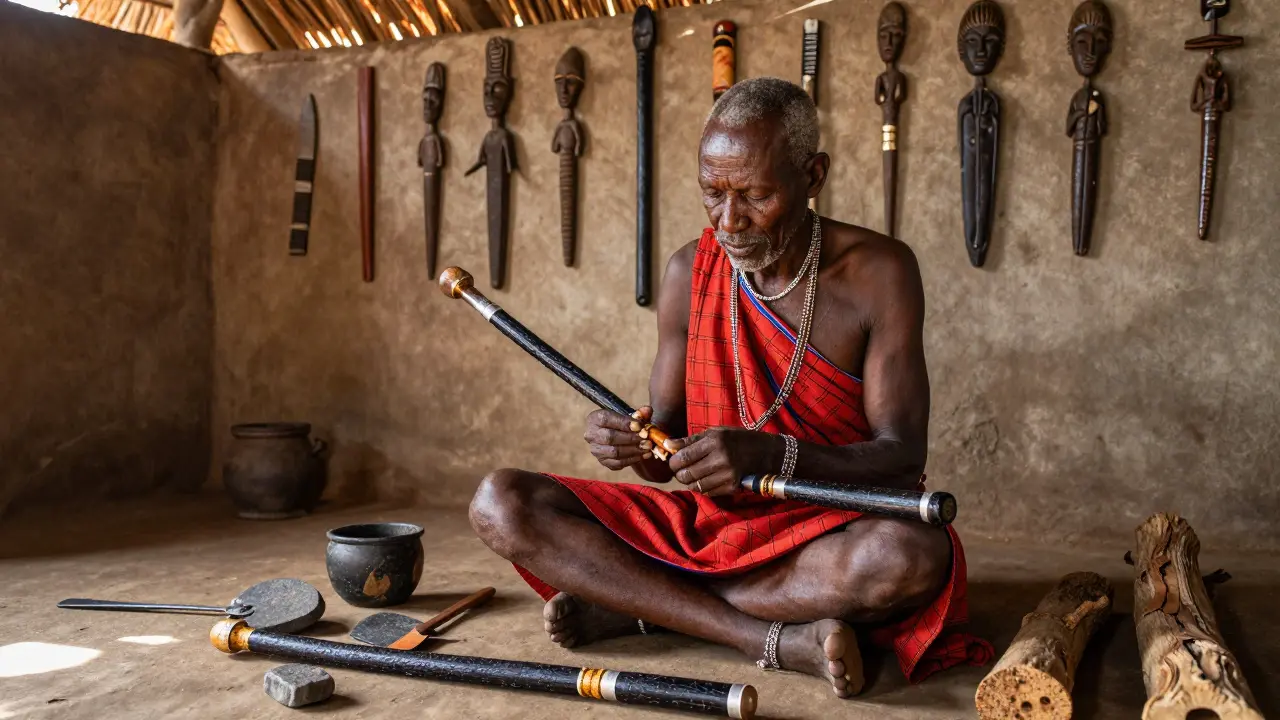
There’s no factory that makes rungus. Each one is hand-carved. The process begins with selecting the right tree. Not just any wood works. The wood must be dense enough to survive repeated impact, but not so brittle that it shatters. Elders often know which trees grow in the right soil, under the right sun.
Once cut, the log is left to dry for months - sometimes over a year. Wet wood warps. Dry wood cracks. Patience is part of the craft. Then, using knives and scrapers made from metal or stone, the carver shapes the club. The head is rounded with a chisel, the handle smoothed with sandpaper made from crushed stone. Some add a leather grip. Others polish it with animal fat.
Modern rungus sometimes use synthetic finishes or painted designs. But the best ones? Still made the old way. You can tell by the weight. A real rungu feels alive in your hand - balanced, solid, like it was meant to be there.
Its Role Today
In cities like Nairobi or Arusha, you’ll see rungus in shops next to beadwork and masks. But they’re not just souvenirs. Many African families keep them at home - not for display, but as a reminder of roots. Parents give them to children as gifts for graduations or birthdays. It’s a way of saying: remember where you come from.
Some activists have even used the rungu as a symbol in protests. In 2021, a group of Maasai youth carried rungus during a land rights demonstration in Tanzania. They didn’t swing them. They held them upright, like flags. The message was clear: this is who we are. This is what we’ve defended for centuries.
And yet, the rungu faces threats. Deforestation is cutting down the old-growth trees it needs. Younger generations are moving to cities, where the rungu has no practical use. Some worry it will fade into history like the bow and arrow.
Why It Still Matters
The rungu isn’t a relic. It’s a living object. It carries stories - of hunts avoided, cattle saved, boys becoming men. It’s a quiet piece of African heritage that doesn’t need to be loud to be powerful.
When you hold one, you’re not holding a club. You’re holding a connection - to the land, to ancestors, to a way of life that still breathes.
Is the rungu still used as a weapon today?
Yes, but rarely for violence. In rural areas, it’s still used to defend livestock from predators like lions, leopards, and hyenas. It’s also carried during nighttime patrols. In urban settings, it’s mostly symbolic - carried by elders or used in cultural performances. The Maasai have strict codes against using it in personal conflicts. Its primary role now is protection, not aggression.
Can anyone buy a real rungu, or is it only for certain people?
Anyone can buy a rungu - but there’s a difference between a tourist souvenir and a culturally authentic one. Many mass-produced rungus sold online are made from soft wood and painted with fake patterns. Real ones are handmade by artisans in Kenya and Tanzania, often sold directly through cooperatives. Buying from these sources supports the tradition and ensures you’re getting something with cultural integrity.
What kind of wood is best for a rungu?
The best wood is dense and durable. Acacia is the most common - it’s tough, resistant to splitting, and grows widely across East Africa. Mukwa (African teak) and ebony are prized for their weight and polish, but they’re rarer. Some older rungus are made from marula wood, which has a natural resistance to insects. The wood must be properly dried - sometimes for over a year - to prevent warping or cracking.
Do women carry rungus?
Traditionally, the rungu was carried by men, especially warriors. But in recent decades, women in Maasai and Samburu communities have started carrying them too - not for combat, but as a symbol of empowerment. Some women use them during community meetings or while traveling alone. It’s a quiet statement: I am capable of protecting myself and my family.
How do you properly hold and swing a rungu?
Hold it like a baseball bat, but with a looser grip. The power comes from the swing, not the arm strength. A proper swing uses the whole body - hips, shoulders, and wrist snap. The goal isn’t to crush, but to strike with precision. Traditional users practice on targets made of stacked hides or logs. The key is control. A well-swinged rungu can knock a lion off balance without shattering the club itself.