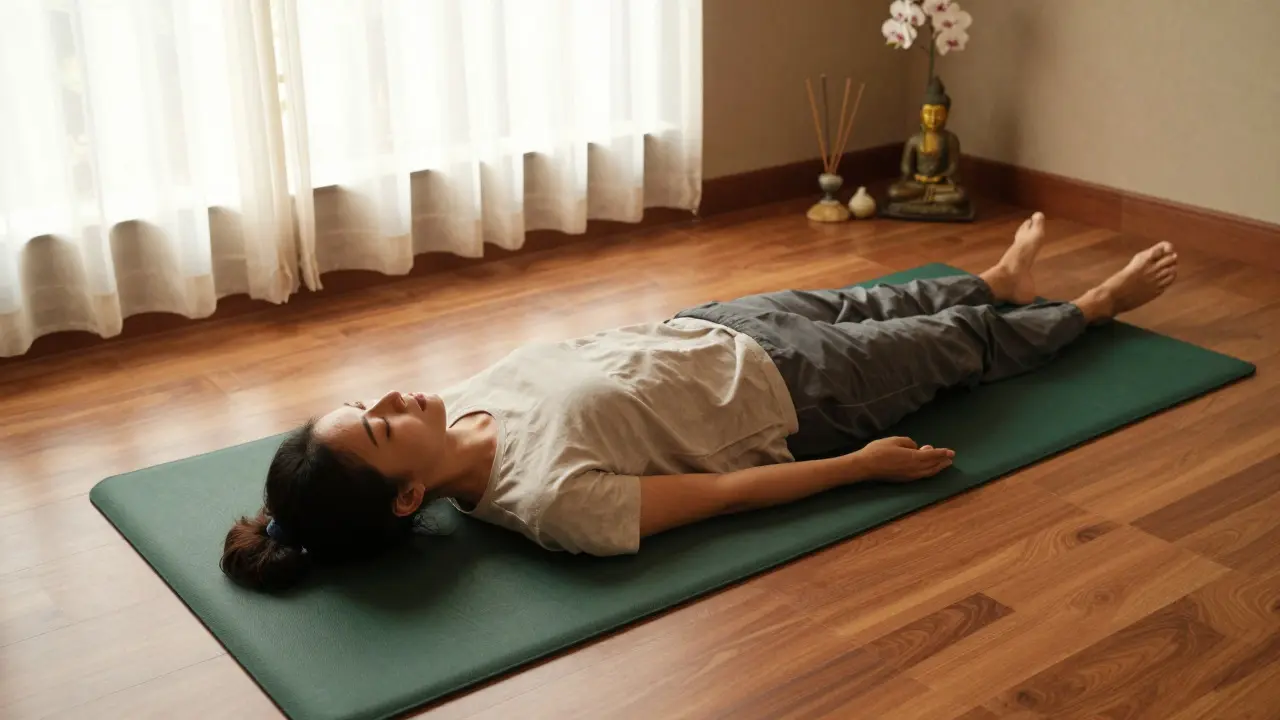
Rolfing: A Solution for Tension Headaches

If you’ve been living with tension headaches for months-or years-you know how draining they are. The dull ache behind your eyes, the tight band around your skull, the way your neck feels like it’s been wrapped in concrete. Painkillers might dull the edge, but they don’t touch the root. What if the problem isn’t in your head at all? What if it’s in your shoulders, your jaw, your chest? That’s where rolfing comes in.
What Is Rolfing?
Rolfing is a form of bodywork developed by Dr. Ida Rolf in the 1950s. It’s not massage. It’s not chiropractic. It’s structural integration. The idea is simple: your body is a system of connective tissue, or fascia, that holds everything in place. When that tissue gets tight, twisted, or stuck from stress, injury, or poor posture, your whole structure shifts. And when your structure shifts, your head pays the price.
Unlike regular massage that focuses on relaxation, Rolfing targets the deep layers of fascia that connect muscles, bones, and organs. A Rolfing session uses firm, deliberate pressure-often with the therapist’s elbows, knuckles, or forearms-to release these stuck areas. Sessions usually last 60 to 90 minutes and are done in a series of 10, each building on the last. It’s not gentle. But for many people with chronic tension headaches, it’s the first thing that actually worked.
Why Tension Headaches Start in the Body, Not the Brain
Tension headaches are often called "stress headaches," but stress doesn’t live in your brain. It lives in your muscles. When you’re under pressure, your body tenses up-shoulders hike toward your ears, your jaw clenches, your chest flattens. Over time, these patterns become permanent. Your head, sitting on top of a stiff, misaligned neck and upper back, gets pulled forward. That puts constant strain on the muscles and nerves that connect your skull to your spine.
Studies show that up to 80% of people with chronic tension headaches have tightness in the suboccipital muscles-the small muscles at the base of the skull. These muscles are directly connected to the fascia running down your back and into your shoulders. When they’re tight, they pull on the dura mater, the tough membrane surrounding your brain. That tug is what triggers the pain. Rolfing doesn’t just loosen those muscles. It reorganizes the entire chain.
How Rolfing Breaks the Cycle
Most headache treatments focus on the head: ice packs, massage balls, over-the-counter meds. Rolfing starts at the feet. The first session in a Rolfing series usually works on the feet and lower legs. Why? Because your posture starts from the ground up. If your feet are collapsed, your knees turn inward, your pelvis tips, your spine curves, and your head juts forward. That’s a recipe for constant tension.
By the third or fourth session, the focus moves to the shoulders and chest. Many people carry tension in their pectoral muscles, which pull the shoulders forward and flatten the rib cage. This compresses the nerves running from the neck to the head. A Rolfing practitioner will gently but firmly release those muscles, allowing the shoulders to drop back into alignment. The result? Less pressure on the occipital nerves. Less pulling on the dura. Less pain.
One woman I worked with in Melbourne had headaches every day for seven years. She’d tried acupuncture, chiropractic, physical therapy, even Botox. Nothing stuck. After her sixth Rolfing session-focused on releasing her sternocleidomastoid muscles and the fascia under her jaw-her headaches dropped from daily to once a week. After ten sessions, they vanished. She didn’t need to change her job, her diet, or her stress levels. She just needed her body to stop holding itself in a knot.
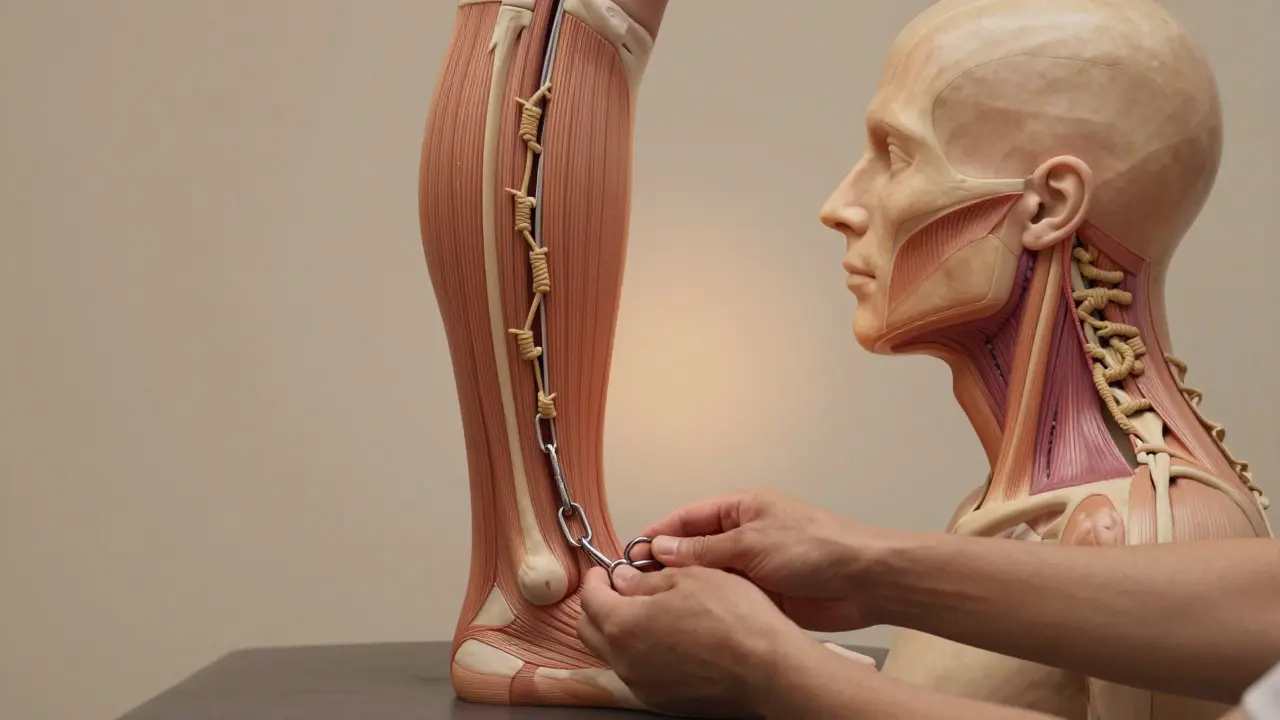
What Happens in a Typical Rolfing Session
Each session has a different focus. Here’s what a standard 10-session series looks like:
- Feet and lower legs-grounding your structure
- Knees and thighs-balancing leg alignment
- Front of hips and pelvis-releasing the deep hip flexors
- Back of hips and glutes-unwinding the pelvic tilt
- Spine and rib cage-freeing the torso
- Shoulders and upper back-opening the chest
- Arms and hands-releasing tension up to the neck
- Neck and head-direct work on the suboccipitals
- Integration-how all parts move together
- Refinement-fine-tuning your posture
You don’t need to do all ten sessions to feel a difference. Many people report relief after just three. But the full series gives lasting results because it doesn’t just fix one area-it reprograms your whole posture.
Who Benefits Most From Rolfing for Headaches?
Rolfing isn’t a magic cure for every kind of headache. But it’s especially effective if your tension headaches have these signs:
- You wake up with a headache every morning
- Your shoulders are always tight or rounded
- You clench your jaw when you’re focused or stressed
- You feel pressure behind your eyes, not just in your temples
- Massage or heat helps temporarily, but the pain always comes back
If you’re a desk worker, a student, a parent, or anyone who spends hours hunched over screens or phones, Rolfing can reset your body’s default position. It’s not about relaxation. It’s about retraining.
What to Expect After a Session
Rolfing isn’t relaxing. It’s intense. You might feel sore for a day or two afterward-like after a hard workout. But you’ll also notice changes. Your head might feel lighter. Your shoulders might drop without you trying. You might realize you’re breathing deeper. That’s your body adjusting to its new alignment.
Some people feel dizzy or emotional after a session. That’s normal. Fascia holds memories. When it releases, you might feel a rush of emotion, or even a sudden burst of energy. Don’t panic. It’s your body letting go.
Hydrate well after a session. Movement helps too. A short walk, some gentle stretching. Avoid heavy lifting or intense workouts for 24 hours. Let your body integrate the changes.
How Rolfing Compares to Other Therapies
| Therapy | Focus | Duration of Relief | Cost per Session | Number of Sessions Needed |
|---|---|---|---|---|
| Rolfing | Structural alignment, fascia release | Long-term (months to years) | $120-$180 AUD | 10 (optional series) |
| Massage Therapy | Superficial muscle relaxation | Hours to days | $70-$120 AUD | Weekly or monthly |
| Chiropractic | Bone alignment, joint adjustment | Days to weeks | $80-$150 AUD | 6-12 (ongoing) |
| Physical Therapy | Strengthening, movement retraining | Weeks to months | $90-$160 AUD | 8-16 |
| Botox Injections | Nerve blocking | 3-4 months | $300-$600 AUD | Every 3 months |
Rolfing stands out because it doesn’t just mask the pain-it changes the system that causes it. You’re not just getting relief. You’re getting a new way of holding yourself.
Is Rolfing Right for You?
If you’re tired of treating symptoms instead of causes, Rolfing offers a path forward. It’s not for everyone. It requires commitment. You need to be willing to feel discomfort to get results. But if you’ve tried everything else and still wake up with that same old ache, it’s worth a try.
Find a certified Rolfer through the Rolf Institute of Structural Integration or International Association of Structural Integrators. Ask if they’ve worked with headache clients. Look for someone who explains how your posture relates to your pain-not just someone who pushes on your back.
It’s not a quick fix. But for many, it’s the first real solution.
Can Rolfing help with migraines, not just tension headaches?
Rolfing is primarily designed for tension headaches caused by muscle and fascial tension. Migraines have different triggers-neurological, hormonal, or environmental-and aren’t usually caused by postural strain. While some migraine sufferers report reduced frequency after Rolfing, it’s not a treatment for migraines. If you have true migraines, consult a neurologist first.
Does Rolfing hurt?
It can be intense, but it shouldn’t be unbearable. A good Rolfer will work within your comfort zone and adjust pressure based on your feedback. You’ll feel deep pressure, maybe even a burning or stretching sensation, but sharp pain means they’re going too far. Communication during the session is key.
How long until I see results?
Some people feel relief after the first session, especially if their headaches are linked to recent posture changes. For chronic cases, noticeable improvement usually starts around session three or four. The full benefit builds over the 10-session series, with many reporting lasting changes months after completion.
Do I need to do all 10 sessions?
No. Many people stop after 3-5 sessions and feel significant improvement. But the full 10-session series is designed to create lasting structural change. If you want your headaches to stay gone-not just temporarily reduced-completing the series gives you the best chance.
Can I do Rolfing if I have a herniated disc or other spine issue?
Yes, but only with clearance from your doctor. A certified Rolfer will avoid direct pressure on injured areas and focus on supporting structures. Many people with spinal issues find Rolfing helps reduce compensatory tension that worsens their pain. Always disclose your full medical history before starting.
Next Steps
If you’re considering Rolfing, start with one session. Don’t commit to the whole series right away. See how your body responds. Track your headache frequency before and after. Talk to your Rolfer about your specific symptoms. If you feel lighter, more aligned, and less tense, you’re on the right path. And if your headaches start to fade-not just with meds, but because your body finally stops holding itself in pain-you’ll know you found something that works.