
Maya Abdominal Massage: Secrets, Benefits, and How It Works

You might have heard whispers about a therapy that claims to realign your internal organs, ease period pain, and even help with fertility. It sounds almost too good to be true, doesn't it? But Maya Abdominal Massage, also known as the Arvigo Techniques of Maya Abdominal Therapy (ATMAT), is a legitimate practice rooted in ancient Mayan wisdom and modern anatomical understanding. Developed by Rosita Arvigo, this non-invasive technique focuses on the abdomen to restore balance to the reproductive and digestive systems. If you've been dealing with chronic bloating, irregular cycles, or just feel "stuck" in your lower belly, this might be the missing piece of your wellness puzzle.
| What it is: | A manual therapy that gently repositions displaced pelvic organs and improves circulation. |
| Who it's for: | People with menstrual issues, fibroids, endometriosis, constipation, or postpartum recovery needs. |
| The Goal: | To release tension in the psoas muscles and ligaments, allowing organs to return to their optimal position. |
| Is it painful? | No. It should feel like a deep, soothing stretch. Pain indicates the practitioner is pushing too hard. |
Where Did This Technique Come From?
The story behind Maya Abdominal Massage is fascinating because it bridges two worlds. On one side, you have the indigenous midwives of Belize, Guatemala, and Mexico who used these techniques for centuries. They called it Rubbing of the Belly. On the other side, you have Dr. Eliseo Arvigo, a chiropractor, and his wife Rosita, who spent decades learning from Don Elijio Panti, a respected Mayan healer. Rosita didn't just copy the moves; she studied Western anatomy to understand why they worked. She discovered that many gynecological issues stem from physical displacement-when the uterus tilts forward or backward, or when the intestines get tangled due to scar tissue or stress. By combining traditional touch with medical knowledge, she created a system that practitioners worldwide now use.
How Does It Actually Work?
Think of your abdomen as a crowded apartment building. Your liver, stomach, spleen, pancreas, kidneys, small intestine, large intestine, bladder, and reproductive organs all share space. When you're stressed, your body tightens up. The psoas muscles (which connect your spine to your legs) shorten, pulling your lumbar spine and shifting your pelvis. This shift can compress your organs, restricting blood flow and lymphatic drainage.
Maya Abdominal Massage works by gently manipulating these structures. A trained therapist uses specific hand movements to lift and support the organs, encouraging them to move back into their natural positions. It’s not about forcing things back; it’s about creating space. For example, if you have a retroverted uterus (tipped backward), the massage helps lift it forward, which can relieve pressure on the sacrum and reduce back pain. Similarly, if your colon is sluggish, the rhythmic strokes stimulate peristalsis, helping waste move through your system more efficiently.
Who Can Benefit from This Therapy?
While anyone can benefit from abdominal work, certain groups see dramatic improvements. Women struggling with hormonal imbalances often find relief here. Conditions like endometriosis and uterine fibroids involve structural changes that medication alone can't fix. While massage won't shrink a large fibroid overnight, it can improve circulation to the area, potentially slowing growth and reducing symptoms like heavy bleeding or cramping.
Digestive issues are another major reason people seek this out. Chronic constipation isn't just about fiber; it's often about mobility. If your transverse colon is stuck due to adhesions from past surgeries (like C-sections or appendectomies), no amount of prunes will help until those adhesions are softened. The gentle pressure of ATMAT helps break down minor scar tissue and encourages motility.
- Fertility Support: Many women use it pre-conception to optimize uterine lining health and position.
- Postpartum Recovery: Helps close the diastasis recti (ab separation) and supports organ repositioning after birth.
- Menopause: Can alleviate hot flashes and mood swings by improving overall pelvic circulation.
- Chronic Pelvic Pain: Offers a non-pharmaceutical option for managing discomfort.
What Happens During a Session?
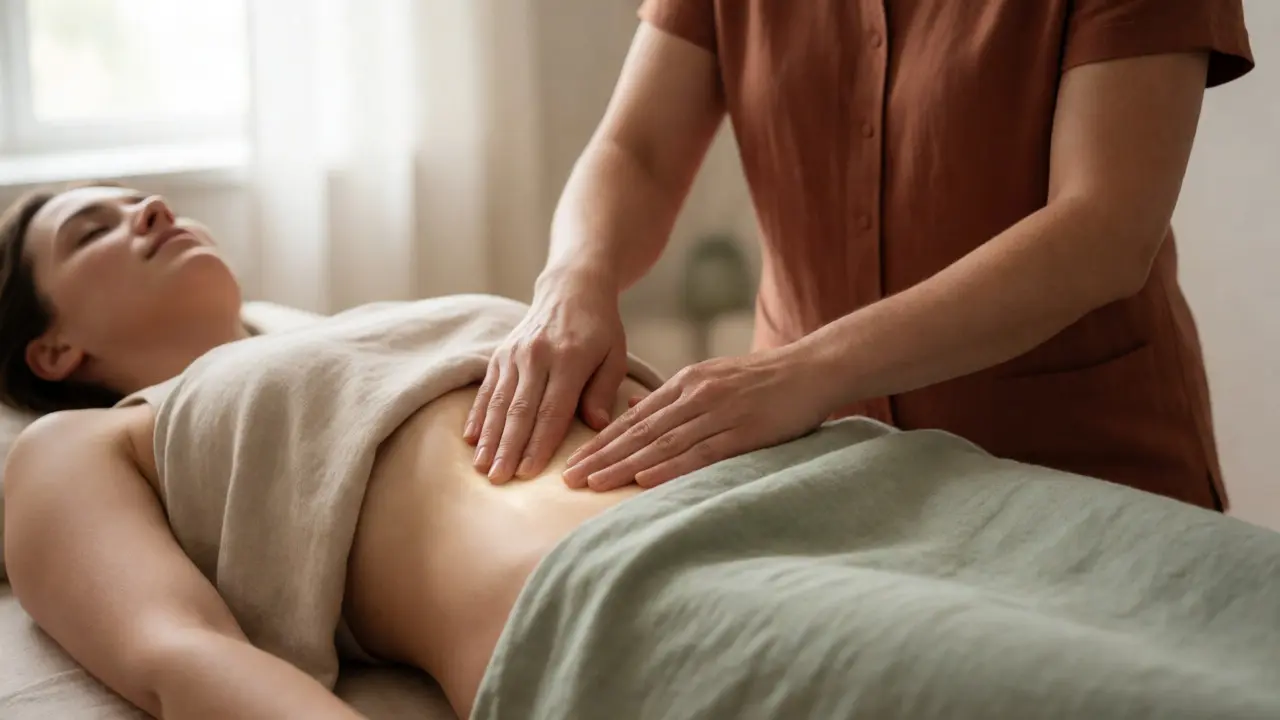
If you're nervous about getting your belly rubbed, don't be. A typical session lasts about 60 to 90 minutes. You'll lie on a table, fully clothed or wearing light undergarments, depending on your comfort level. The therapist starts by assessing your posture and palpating your abdomen to identify areas of tension or displacement. They’ll ask about your medical history, including surgeries, pregnancies, and menstrual patterns.
The actual massage involves slow, deliberate strokes. You might feel warmth spreading across your lower belly. Some people experience an emotional release during the session-crying or laughing is common because the gut is often called our "second brain." We store trauma and stress in our visceral fascia. Releasing that physical tension can sometimes unlock emotional blocks. After the session, you might feel tired or thirsty. Drink plenty of water to help flush out toxins released from the tissues.
Can You Do It Yourself?
Yes, and you should. Practitioners teach self-care techniques because consistency is key. One simple exercise is the "Abdominal Lift." Lie on your back with knees bent. Place your hands on your lower ribs. As you exhale, gently lift your ribcage upward and inward, feeling your lower belly flatten. Hold for a few seconds, then inhale and release. Repeat this ten times daily. It strengthens the core without straining the pelvic floor.
Another easy move is gentle clockwise circular motions around your navel. Use firm but comfortable pressure. Start near the right hip, move up to the ribs, across to the left, and down to the left hip. This follows the path of your large intestine, aiding digestion. Doing this for five minutes every morning can significantly reduce bloating throughout the day.

Potential Risks and Contraindications
Like any therapy, it’s not for everyone. Avoid abdominal massage if you are currently pregnant (unless specifically instructed by a specialist), have active cancer, a hernia, or an acute infection. If you’ve had recent abdominal surgery, wait at least six weeks before starting sessions to allow proper healing. Always consult your healthcare provider before trying new alternative treatments, especially if you have underlying health conditions.
Frequently Asked Questions
Does Maya Abdominal Massage hurt?
No, it shouldn't. The technique relies on gentle, sustained pressure rather than forceful kneading. If you feel sharp pain, tell your practitioner immediately. Discomfort might indicate significant tension, but it should never be unbearable.
How many sessions do I need to see results?
It varies. For acute issues like constipation, some people notice improvement after one session. For chronic conditions like endometriosis or fertility support, a series of 4-8 sessions spaced weekly or bi-weekly is often recommended, followed by monthly maintenance.
Is it safe during pregnancy?
Generally, no. Most practitioners avoid deep abdominal work during the first trimester and late third trimester unless specialized training is involved. It’s best used pre-conception or postpartum. Always check with your OB-GYN first.
What should I wear to my appointment?
Wear loose, comfortable clothing that allows access to your abdomen. Some therapists prefer you to undress to your underwear for better skin-to-skin contact using oil, while others work over thin fabric. Ask your practitioner beforehand so you know what to expect.
Can men benefit from this too?
Absolutely. Men suffer from digestive issues, prostate concerns, and pelvic floor dysfunction. The same principles of organ positioning and circulation apply regardless of gender.
Final Thoughts on Healing Your Center
Your abdomen is more than just a container for food; it’s the engine room of your health. Ignoring persistent discomfort there can lead to bigger systemic issues down the road. Maya Abdominal Massage offers a respectful, non-invasive way to listen to your body’s signals. Whether you’re seeking relief from stubborn cramps or simply want to optimize your digestive flow, giving this therapy a try could be the breakthrough you’ve been waiting for. Remember, healing takes time, so pair professional sessions with consistent self-care practices for the best outcomes.