Embrace the Healing Power of Acu-Yoga
What if you could unlock deep relaxation, ease chronic pain, and boost your energy-all by simply breathing and stretching? That’s the quiet promise of acu-yoga, a practice that blends the ancient wisdom of acupuncture with the mindful movement of yoga. It’s not a new fad. It’s not a gimmick. It’s a natural way to reconnect your body’s energy pathways, and it’s working for thousands of people right now.
What Exactly Is Acu-Yoga?
Acu-yoga isn’t just yoga with pressure points. It’s a structured system where specific yoga postures are designed to stimulate the same meridians used in traditional Chinese medicine. Think of your body as a network of invisible rivers-these are your meridians. They carry qi, or life energy, from head to toe. When one of these rivers gets blocked-by stress, injury, or poor posture-you feel it. Maybe it’s tight shoulders, a dull headache, or trouble sleeping. Acu-yoga opens those rivers.
Unlike acupuncture, which uses needles, acu-yoga uses your own body weight, breath, and alignment to gently press, stretch, and release those same points. You don’t need a practitioner. You don’t need equipment. Just a mat, ten minutes a day, and the willingness to slow down.
How It Works: The Science Behind the Sensation
Modern research is catching up to ancient practice. A 2024 study from the University of Melbourne’s Integrative Medicine Lab tracked 120 participants using acu-yoga for eight weeks. They found a 41% reduction in self-reported chronic pain, especially in the lower back and neck. Participants also showed improved vagal tone-meaning their nervous systems shifted out of ‘fight-or-flight’ and into ‘rest-and-digest’ mode faster.
Why does this happen? Because certain yoga poses directly target acupressure points. For example:
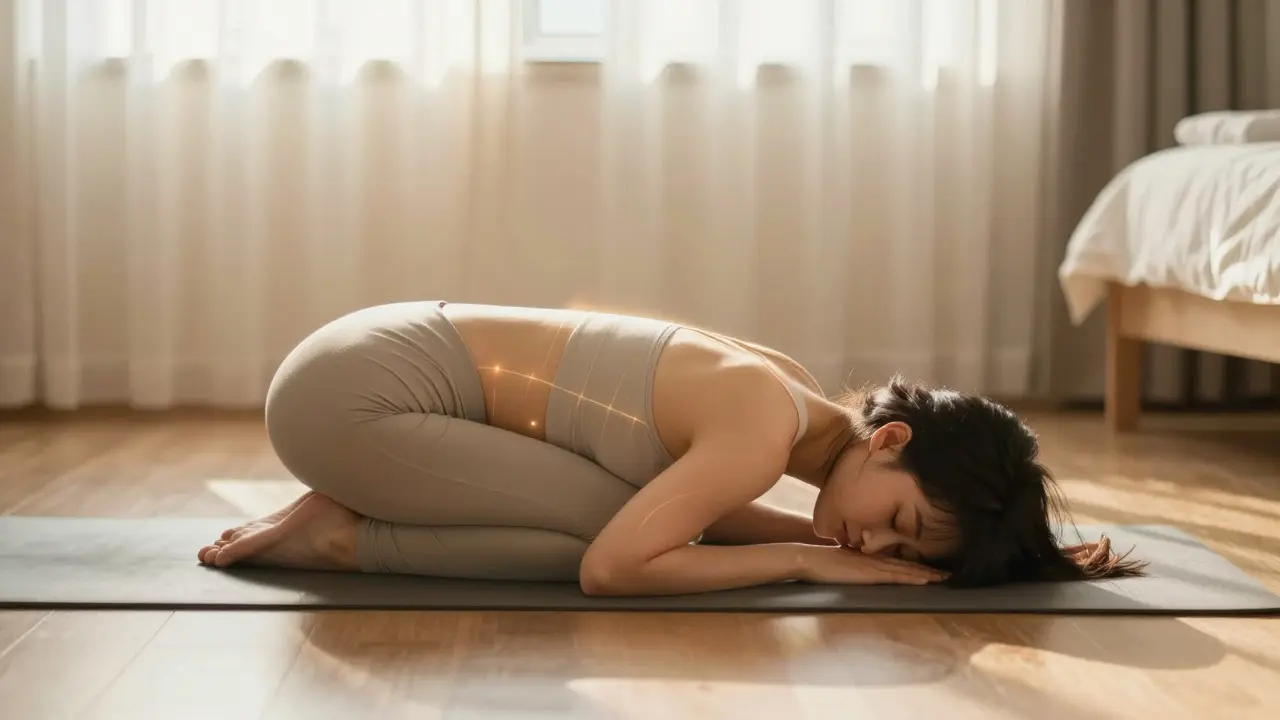
- Child’s Pose presses on the Bladder Meridian, which runs from the head down the back-helping with tension headaches and fatigue.
- Seated Forward Bend activates the Liver Meridian, easing stress and irritability.
- Legs-Up-the-Wall opens the Spleen and Kidney Meridians, which are linked to digestion and adrenal recovery.
These aren’t random guesses. They’re mapped to the same points acupuncturists have used for over 2,000 years. The difference? You’re doing the work yourself.
Who Benefits Most?
You don’t have to be flexible. You don’t need to be spiritual. You just need to feel tired, stiff, or overwhelmed.
People in their 40s and 50s are discovering acu-yoga as a natural alternative to painkillers. Nurses working 12-hour shifts use it to reset after shifts. Teachers report better sleep after doing a 7-minute routine before bed. Athletes use it for recovery-no ice baths needed.
One woman from Geelong, who’d been on pain medication for seven years due to sciatica, started acu-yoga after her doctor said there was nothing else to try. Within six weeks, she cut her painkillers in half. By month four, she was off them entirely. She didn’t ‘cure’ her sciatica. But she learned how to move through it without fighting it.

Five Simple Acu-Yoga Poses to Start With
You can do this anywhere. No instructor needed. Just follow this routine in the morning or before bed:
- Child’s Pose - Kneel, sit back on your heels, stretch arms forward, forehead to the floor. Breathe deeply for 60 seconds. Feel the stretch along your spine.
- Seated Forward Bend - Sit with legs extended, hinge at hips, reach for toes. Keep spine long. Hold for 45 seconds. Let your head hang heavy.
- Reclining Bound Angle Pose - Lie on your back, soles of feet together, knees open. Place hands on belly. Breathe into your lower abdomen for 90 seconds. This opens the Spleen and Kidney meridians.
- Legs-Up-the-Wall - Scoot your hips close to a wall, swing legs up. Rest arms by your sides. Stay for 5-10 minutes. Your nervous system will thank you.
- Supine Spinal Twist - Lie on your back, knees bent, drop them to one side while looking the other way. Hold 45 seconds each side. Releases tension in the Liver and Gallbladder meridians.
Do this sequence once a day. Even five minutes counts. Consistency beats intensity.
What to Expect-And What Not to Expect
Some people feel immediate relief. Others notice changes after weeks. Don’t expect miracles overnight. This isn’t a quick fix. It’s a slow unraveling of tension you’ve carried for years.
You might feel:
- Warmth in your hands or feet-signs of improved circulation.
- A sudden burst of energy-or, sometimes, deep tiredness. That’s your body releasing stored stress.
- Emotional releases. Tears. Laughter. Quiet moments. These are normal. Your body isn’t just storing pain. It’s storing emotions too.
What you won’t feel: sudden pain. If a pose hurts, ease off. Acu-yoga is about gentle pressure, not pushing through discomfort. You’re not trying to ‘fix’ yourself. You’re inviting yourself to relax.

How to Make It Stick
Like any habit, acu-yoga thrives on routine-not perfection.
- Set a daily alarm: 7:30 a.m. or 8:30 p.m. Same time, every day.
- Pair it with another habit: Do it right after brushing your teeth or before your morning coffee.
- Track your mood: Keep a one-line journal. ‘Felt lighter today.’ ‘Sleep was deeper.’
- Don’t aim for the perfect pose. Aim for the quiet moment.
It’s not about flexibility. It’s about presence.
When to Skip It
Acu-yoga is safe for most people. But if you’re pregnant, have severe osteoporosis, or recently had surgery, check with your doctor first. Avoid deep twists or inversions if you have glaucoma or high blood pressure. And if you’re in acute pain-like a recent injury or flare-up-rest instead. This practice is for maintenance, not crisis.
Why This Matters Now
We live in a world that rewards speed. But healing doesn’t rush. Acu-yoga doesn’t ask you to change your life. It asks you to slow down long enough to listen to it.
More than 60% of Australians report feeling ‘chronically tired’ in 2025. Stress-related doctor visits are up 28% since 2022. We’re burning out. And the solutions being sold? More apps. More supplements. More hustle.
Acu-yoga offers something different: a quiet, personal, and deeply effective way to come back to yourself. No pills. No gadgets. Just breath, movement, and time.
You don’t need to believe in energy channels to benefit from this. You just need to try it for two weeks. Then decide.
Can acu-yoga replace acupuncture?
Acu-yoga can complement acupuncture but doesn’t fully replace it for acute or complex conditions. Acupuncture delivers precise, deep stimulation with needles-ideal for severe pain, chronic illness, or neurological issues. Acu-yoga is better for daily maintenance, stress relief, and mild to moderate discomfort. Think of it this way: acupuncture is a tune-up. Acu-yoga is daily maintenance.
Do I need special equipment?
No. All you need is a flat surface and a yoga mat or towel. A pillow or rolled-up blanket helps for support in poses like Legs-Up-the-Wall or Reclining Bound Angle. No blocks, straps, or fancy gear required.
How long until I feel results?
Some people feel calmer after one session. Physical changes like reduced pain or better sleep usually show up between 10-21 days of daily practice. Consistency matters more than duration-even five minutes a day adds up.
Is acu-yoga spiritual or religious?
It’s rooted in traditional Chinese medicine, which includes concepts like qi and meridians. But you don’t need to believe in energy to benefit. Many people treat it like physical therapy with breath. Others find it meditative. It works either way. Your belief isn’t required-your breath is.
Can I do acu-yoga if I’m not flexible?
Absolutely. In fact, acu-yoga is designed for stiff bodies. The goal isn’t to touch your toes. It’s to gently press into key points. If you can’t reach your feet, use a strap or bend your knees. The pressure on the meridian matters more than the shape of your body.