Why Everyone Is Talking About Body-to-Body Massage

Body-to-body massage isn’t new-but right now, it’s everywhere. Social media feeds are full of clips of therapists sliding warm oil between their skin and a client’s back. Instagram influencers are posting about it as a "deep relaxation experience." Even wellness clinics in Perth and Melbourne are adding it to their menus. But why now? And what’s really going on beneath the surface?
It’s Not What You Think
Let’s clear this up first: body-to-body massage isn’t erotic massage. It’s not sexual. It’s not a substitute for intimacy. It’s a hands-on therapy where the practitioner uses their own body-forearms, elbows, hips, even legs-to apply pressure and glide over the client’s skin. The goal? To create a deeper, more fluid sensation than traditional hand-only massage can offer.
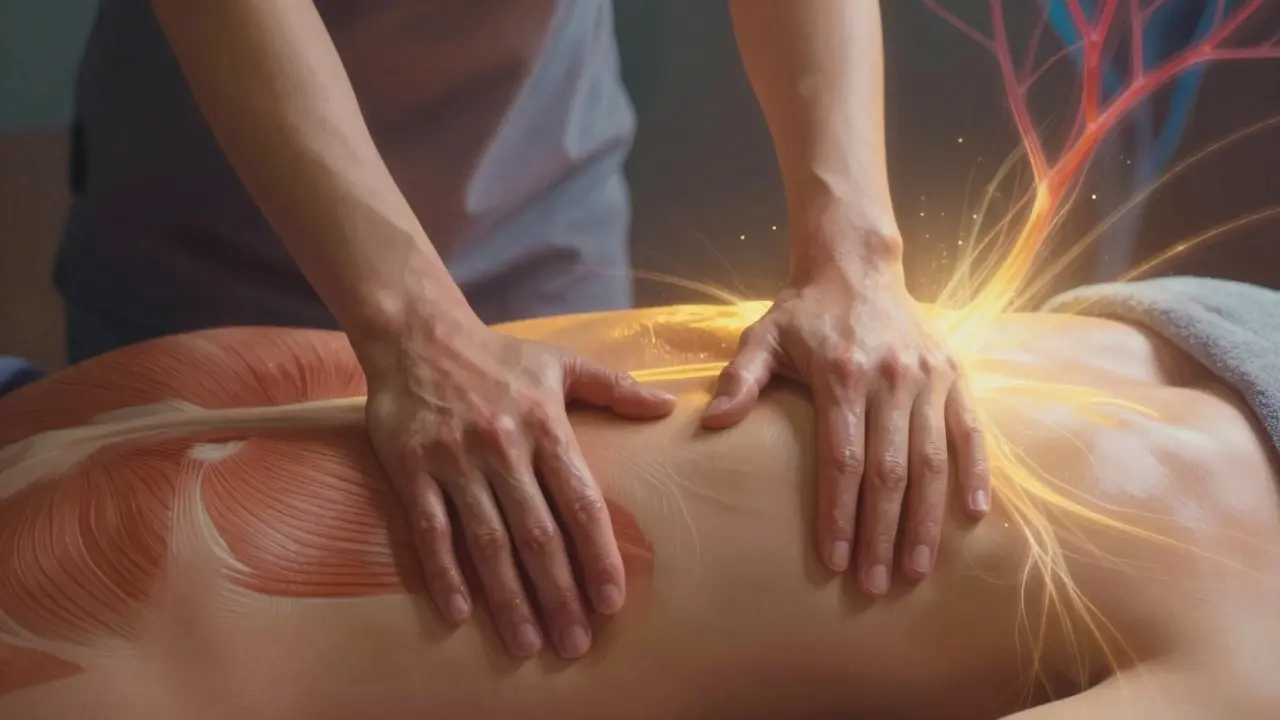
Think of it like this: your hands have bones, tendons, and limited surface area. A therapist’s forearm? That’s a broad, warm, flexible tool. When they use it to roll along your latissimus dorsi or glide down your hamstrings, the pressure is smoother. It doesn’t pinch. It doesn’t jab. It flows.
There’s a reason this technique has been used for centuries in Thai massage, some forms of Shiatsu, and even ancient Hawaiian Lomi Lomi. The body-to-body approach mimics natural movement-like waves, wind, or even a mother rocking a child. It’s not about arousal. It’s about surrender.
Why It Feels Different
Most massage therapists work with their hands because it’s easier to control. But hands can’t replicate the warmth, weight, and continuity of another human body. When a therapist uses their torso or thigh to press into your glutes, the heat transfers. The rhythm feels alive. It’s not mechanical. It’s organic.
One client in Sydney told me she cried during her first session-not from pain, but because she hadn’t realized how much tension she’d been holding. "It felt like my body was being held," she said. "Not touched. Held. Like I wasn’t alone in it."
This isn’t just anecdotal. A 2023 study from the University of Sydney’s Department of Integrative Therapy looked at 87 participants who received either traditional Swedish massage or body-to-body massage. Those who got the body-to-body version reported a 42% greater drop in cortisol levels after one session. They also scored higher on measures of "felt safety"-a psychological state where the nervous system feels protected enough to relax.
That’s the real hook. In a world of constant noise, screens, and performance pressure, people are starving for touch that doesn’t demand anything back. Body-to-body massage offers that. No conversation. No expectations. Just presence.
What You Actually Experience
Here’s what happens in a typical session:
- You lie on a heated table, covered in a light towel.
- The therapist warms organic coconut or jojoba oil between their palms.
- They begin with light strokes using their hands-just to help you settle in.
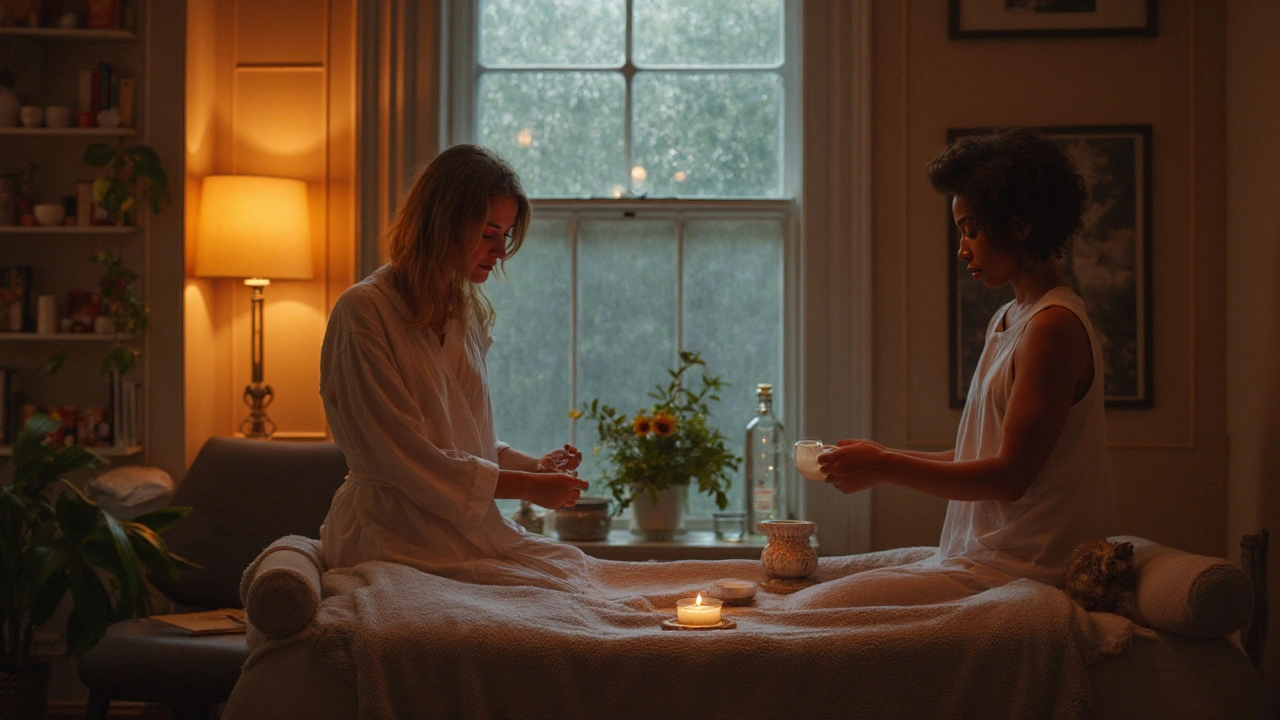
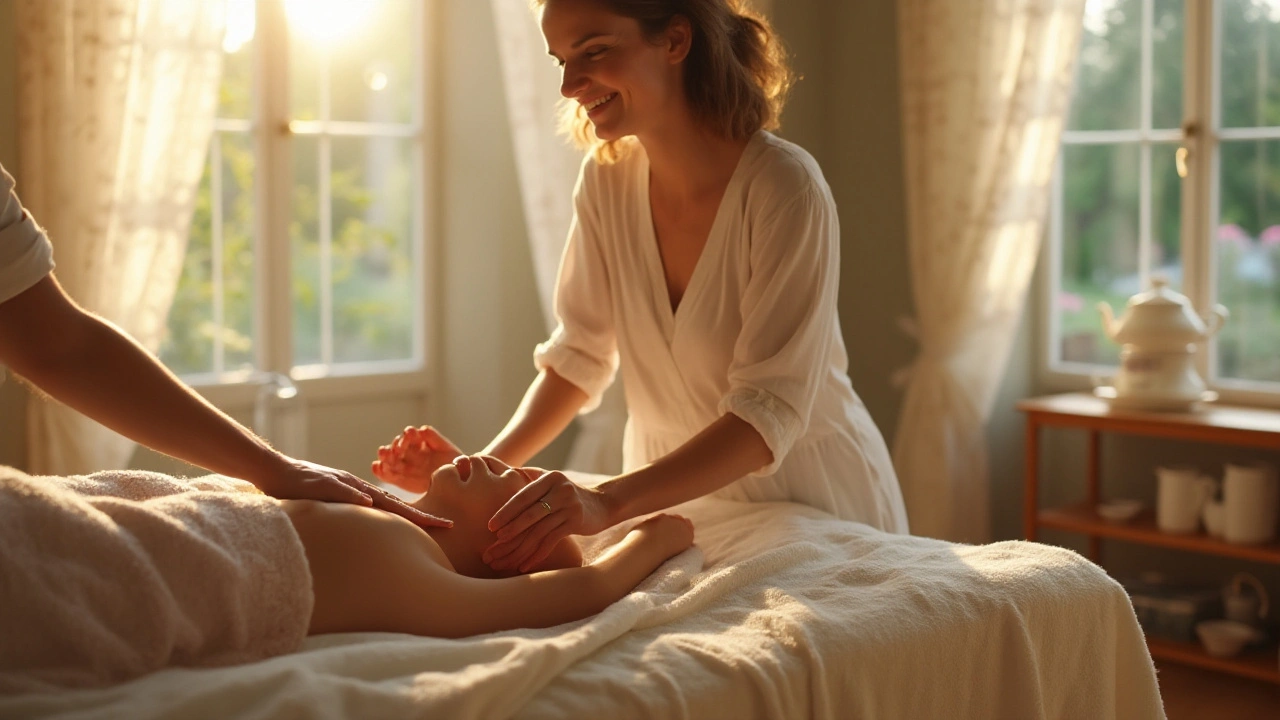
- Then, they remove their top layer (usually a loose tunic or wrap) and use their bare skin-forearms, calves, even the side of their hip-to glide along your spine, shoulders, and legs.
- The pressure builds slowly. It’s never aggressive. It’s more like a slow tide coming in.
- There’s no music, no talking. Just breath.
- After 60 to 90 minutes, you’re wrapped in a warm blanket and given herbal tea.
It’s not a race. There’s no checklist. No "you need to release this muscle." The therapist follows your body’s rhythm, not a script. That’s why people say it feels different from any massage they’ve had before.
Who It’s For (And Who Should Skip It)
Body-to-body massage isn’t for everyone-and that’s okay.
Great for:
- People with chronic muscle tension who haven’t responded to deep tissue or sports massage
- Those dealing with anxiety, PTSD, or emotional numbness
- Anyone who feels disconnected from their body after injury, illness, or long-term stress
- People who crave non-sexual, non-verbal human connection
Not for:
- Anyone uncomfortable with skin-to-skin contact
- People with active skin infections, open wounds, or severe burns
- Those seeking sexual stimulation or emotional intimacy with the therapist
- Anyone who expects a "fix" in one session
It’s not a cure. It’s a reset. A pause button for your nervous system.
The Rise of Professional Standards
Because this technique has been misunderstood, many untrained people started offering it as a "sensual" service. That’s why the Australian Massage Therapy Association (AMTA) released new guidelines in early 2025. Now, certified practitioners must:
- Complete 120 hours of specialized training in body-to-body techniques
- Pass a competency assessment on boundaries and ethics
- Use only natural, hypoallergenic oils
- Keep the environment strictly clinical: no candles, no dim lighting, no music with lyrics
- Require written consent before each session
These rules aren’t about restriction-they’re about protection. They separate therapy from performance. They make it safe for people who are vulnerable to try something unfamiliar.
Why It’s Trending Now
The timing isn’t random. After years of isolation during the pandemic, people are relearning how to be touched without fear. Therapy is no longer just about fixing pain-it’s about healing the sense of disconnection.
Platforms like TikTok and Instagram have amplified it, yes. But the real driver is a quiet, widespread hunger: for touch that’s safe, slow, and silent. For a moment where you don’t have to explain yourself. Where you’re not a worker, a parent, a partner, or a problem to be solved. Just a body. And someone else’s body, gently holding space for yours.
What to Look For
If you’re curious, here’s how to find a legitimate practitioner:
- Check if they’re registered with the AMTA or a similar national body
- Ask if they’ve completed a certified body-to-body training program
- Read reviews that mention "boundaries," "safety," or "professionalism"-not "romantic" or "intimate"
- Visit their space. It should feel like a clinic, not a spa with mood lighting
- They should offer a 15-minute consultation before booking
Don’t be afraid to ask: "How do you ensure this stays therapeutic?" A good therapist will welcome the question.
It’s Not About Sex. It’s About Being Human.
Body-to-body massage isn’t exotic. It’s not a luxury. It’s a return to something ancient: the human body as a tool for healing, not stimulation. In a culture obsessed with speed and output, it’s radical to sit still. To let someone else move with you. To feel warmth without expectation.
People aren’t just talking about it because it’s new. They’re talking about it because, for the first time in a long time, it feels like the world is finally catching up to what our bodies have always needed: gentle, safe, silent connection.
Is body-to-body massage the same as erotic massage?
No. Body-to-body massage is a therapeutic technique used by licensed professionals to relieve muscle tension and calm the nervous system. It’s performed with clear boundaries, professional attire (like a tunic), and no sexual intent. Erotic massage, on the other hand, is designed for sexual arousal and is not regulated as a health service. The two are fundamentally different in purpose, training, and practice.
Does body-to-body massage involve nudity?
The client is typically draped in a towel or sheet, with only the area being worked on exposed. The therapist wears a loose, clean tunic or wrap-never nude. Skin-to-skin contact happens only between the therapist’s forearm, leg, or hip and the client’s skin. No private areas are ever involved. Professional standards require full coverage and consent at every step.
Can body-to-body massage help with anxiety?
Yes. A 2023 study from the University of Sydney found that clients who received body-to-body massage showed a 42% greater reduction in cortisol (the stress hormone) compared to those who received traditional massage. The continuous, rhythmic pressure and warmth help activate the parasympathetic nervous system, which signals the body to rest and recover. Many clients report feeling calmer, more grounded, and less reactive after sessions.
How long does a session last?
Most sessions last between 60 and 90 minutes. The first 10-15 minutes are spent on quiet relaxation and breathwork. The body-to-body work itself takes 45-70 minutes, depending on the client’s needs. The final 10 minutes are for wrapping up, hydration, and gentle movement. Shorter sessions don’t allow enough time for the nervous system to fully shift into rest mode.
Is it safe if I have chronic pain?
It can be, but only if the therapist is trained in working with chronic conditions. Unlike deep tissue massage, body-to-body work uses broad, flowing pressure-not focused force. This makes it gentler on sensitive areas. Always disclose your medical history beforehand. A qualified therapist will adjust pressure and avoid areas of acute inflammation or injury.
Do I need to be physically fit to try this?
No. Body-to-body massage is suitable for people of all fitness levels, ages, and body types. The therapist adapts their technique to your body’s needs-not the other way around. Whether you’re recovering from surgery, managing arthritis, or simply feeling stiff from sitting all day, this approach can be modified to suit you.