
Discover the Magic of Fascia Stretching for Chronic Pain

If you’ve been living with chronic pain for months-or years-you know how exhausting it is. No matter how much you rest, stretch, or massage the sore spots, the ache comes back. You’ve tried heat packs, painkillers, even physical therapy. But what if the real problem isn’t your muscles, or your joints, or your spine… but the fascia?
What Exactly Is Fascia?
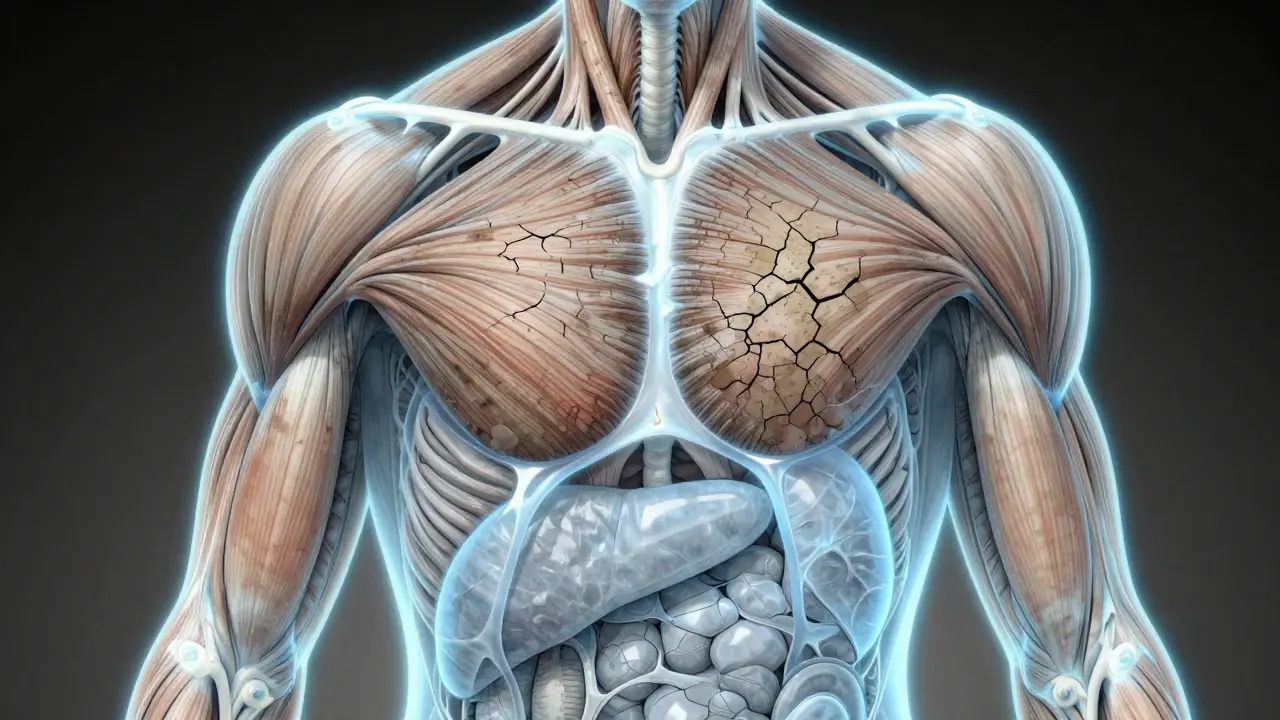
Fascia is the invisible web that holds your body together. It’s a continuous layer of tough, stretchy connective tissue that wraps around every muscle, bone, nerve, blood vessel, and organ. Think of it like plastic wrap that’s been stretched over a whole turkey-except in your body, it’s everywhere, and it’s supposed to glide smoothly.
When fascia is healthy, it’s slippery and flexible. But when you sit too long, get injured, or move unevenly, it gets sticky, tight, and stuck. That’s when pain starts. It’s not always where you feel it, either. A tight fascia in your lower back can pull on your hip, which pulls on your knee, and suddenly you’re wondering why your knee hurts when you never hurt it.
Studies from the Journal of Bodywork and Movement Therapies in 2023 found that over 60% of people with chronic lower back pain had measurable fascial restrictions-not disc issues, not nerve compression, but stiffened connective tissue. That’s why traditional stretches often fail. You’re pulling on muscles, but the real tension is hiding in the web around them.
Why Regular Stretching Doesn’t Work for Chronic Pain
Most people stretch their hamstrings, quads, or shoulders hoping to ease pain. But if the fascia is glued down, you’re just tugging on a tangled rope. You might feel a little relief, but it fades fast because you’re not releasing the root.
Think of it like trying to untangle a knot by pulling harder. Eventually, the rope frays. That’s what happens to your muscles when you overstretch without addressing fascia. You risk micro-tears, inflammation, and more pain.
Fascia responds to slow, sustained pressure-not quick bounces or ballistic moves. It needs time to melt, like butter left on the counter. That’s where fascia stretching comes in.
How Fascia Stretching Is Different
Fascia stretching, also called myofascial release, isn’t about touching muscles. It’s about gently pressing into the tissue and holding. You don’t stretch for 15 seconds like a yoga pose. You hold for 3 to 5 minutes. Yes, minutes. That’s how long it takes for the fascia to relax.
Here’s how it works: when you apply steady pressure to a tight area-say, the outside of your thigh-you’re sending a signal to your nervous system: “It’s safe to let go.” Your body doesn’t feel threatened. It doesn’t fight back. And slowly, the stuck tissue begins to soften.
One 2024 study tracking 87 people with chronic neck pain found that after just four weeks of daily 5-minute fascia stretches, 78% reported at least a 50% reduction in pain. No drugs. No injections. Just slow, patient pressure.
Where to Start: 3 Simple Fascia Stretches for Common Pain Areas
You don’t need a therapist or fancy tools to begin. All you need is a foam roller, a tennis ball, or even a water bottle.
- Lower Back and Hips: Lie on your back with a foam roller under your sacrum (the triangle bone at the base of your spine). Let your legs go loose. Breathe deep. Stay there for 4 minutes. You might feel a dull ache-that’s normal. If it’s sharp, move the roller slightly.
- Shoulders and Upper Back: Place a tennis ball between your shoulder blade and spine while leaning against a wall. Slowly shift your weight to roll the ball along the tight spots. Find one tender spot? Hold still for 3 minutes. Don’t roll around. Just breathe into the pressure.
- Feet and Plantar Fascia: Roll your bare foot over a frozen water bottle for 5 minutes. Cold helps reduce inflammation, and the slow roll breaks up the thickened tissue under your arch. Do this before standing up in the morning.
These aren’t quick fixes. They’re slow reboots for your body’s wiring. The key? Consistency. Do them daily-even if it’s just for 10 minutes total.
What Happens When Fascia Releases?
People often describe the feeling as “my body finally breathing again.” After a good fascia stretch, you might notice:
- Pain that moves or shifts-this means the tension is unraveling
- Improved range of motion without forcing it
- Less morning stiffness
- Better sleep because your nervous system is calmer
- Emotional release-some people cry, laugh, or feel suddenly lighter
That last one? It’s real. Fascia stores more than just physical tension. Trauma, stress, and long-term anxiety get locked into the tissue. Releasing it can feel like emotional detox.

What to Avoid
Fascia stretching isn’t a free pass to go hard. Here’s what to skip:
- Rolling over bones or joints
- Pushing through sharp pain
- Doing it too fast
- Expecting instant results
It’s not a massage. It’s not a workout. It’s a conversation with your body. If it hurts, you’re going too far. If you’re bored, you’re not staying long enough.
When to See a Professional
You can do a lot on your own. But if you’ve tried for 4-6 weeks with no change, or if your pain is radiating, numb, or getting worse, it’s time to see someone trained in myofascial release.
Look for physical therapists, osteopaths, or certified myofascial release practitioners. Ask if they use “direct release” techniques-not just general massage. A good practitioner will track your progress with movement tests, not just ask, “Does it hurt less?”
The Bigger Picture: Fascia and Your Whole Body
Chronic pain doesn’t live in isolation. It’s often tied to how you move, sit, breathe, and even how you sleep. Fascia stretching works best when paired with:
- Walking daily-even 20 minutes helps keep tissue fluid
- Hydrating well (fascia is 70% water)
- Reducing prolonged sitting (stand every 30 minutes)
- Managing stress (cortisol tightens fascia)
One woman in Adelaide, 54, had sciatica for 7 years. She tried everything. Then she started 10 minutes of fascia rolling every morning. Within 8 weeks, she walked her dog without pain. She says, “I didn’t know my body had been holding its breath.”
That’s the magic. It’s not about fixing something broken. It’s about remembering how your body was meant to move.
Can fascia stretching cure chronic pain completely?
Fascia stretching doesn’t “cure” chronic pain like a pill does. But it can remove a major hidden cause. Many people find their pain drops by 50-80% with consistent practice. For some, it’s enough to stop relying on medication. For others, it’s a vital piece of a larger plan that includes movement, sleep, and stress management.
How often should I do fascia stretching?
Daily is ideal, especially at first. Even 10 minutes a day makes a difference. Once pain improves, 3-4 times a week is enough to maintain. Think of it like brushing your teeth-not a one-time fix, but a daily habit that keeps things running smoothly.
Do I need a foam roller or ball?
Not necessarily. Your hands work fine. But tools like foam rollers and tennis balls give you more control and deeper pressure without tiring your arms. A frozen water bottle is great for feet. Start simple-no need to buy a kit.
Can fascia stretching make pain worse?
Yes-if you go too fast, too hard, or too often. Sharp pain, tingling, or numbness means you’re pressing on a nerve or pushing too aggressively. Ease off. Fascia responds to patience, not force. If you feel worse after 2-3 days, take a break and reassess your technique.
Is fascia stretching the same as foam rolling?
Foam rolling is one tool for fascia stretching, but not the whole thing. Rolling is active movement. True fascia stretching is about stillness. You roll to find tight spots, then stop and hold for minutes. The magic happens in the pause, not the motion.