Knife Massage: A New Way to Invigorate Your Body
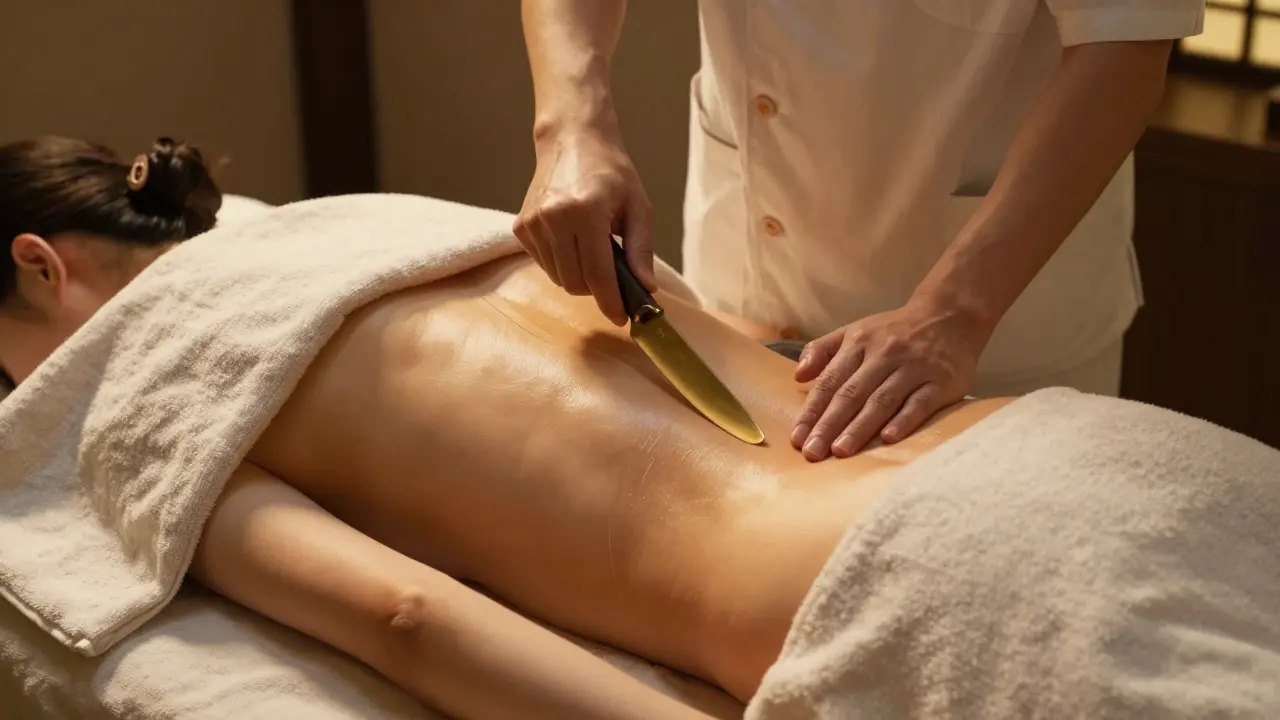
Knife massage sounds like something out of a fantasy novel-or a horror movie. But in certain parts of Asia, especially in rural China and parts of Southeast Asia, it’s been practiced for generations as a form of deep tissue stimulation. No, it’s not dangerous. No, it’s not cutting skin. It’s about using the blunt edge of a metal blade to apply rhythmic pressure along meridians and muscle groups. The goal? To wake up your nervous system, release chronic tension, and improve circulation in ways traditional hands can’t reach.
What Exactly Is Knife Massage?
Knife massage, or dao yin in Chinese, uses a smooth, rounded metal blade-often made of stainless steel or bronze-about the size of a butter knife. The edge is never sharp. Practitioners use the flat side, the spine, or the rounded tip to glide over the skin, applying firm but controlled pressure. It’s not scraping. It’s not cutting. It’s more like a deep-tissue drumstick hitting a tight drumhead, vibrating through fascia and muscle layers.
Think of it as a cross between gua sha and deep tissue massage, but with more precision. The metal blade doesn’t compress the skin like fingers do. Instead, it transfers energy directly into the tissue beneath. People who’ve tried it say it feels like a deep, buzzing warmth spreading through their shoulders, back, or legs-sometimes even triggering a tingling sensation that lasts for hours.
How It Works: Science Behind the Blade
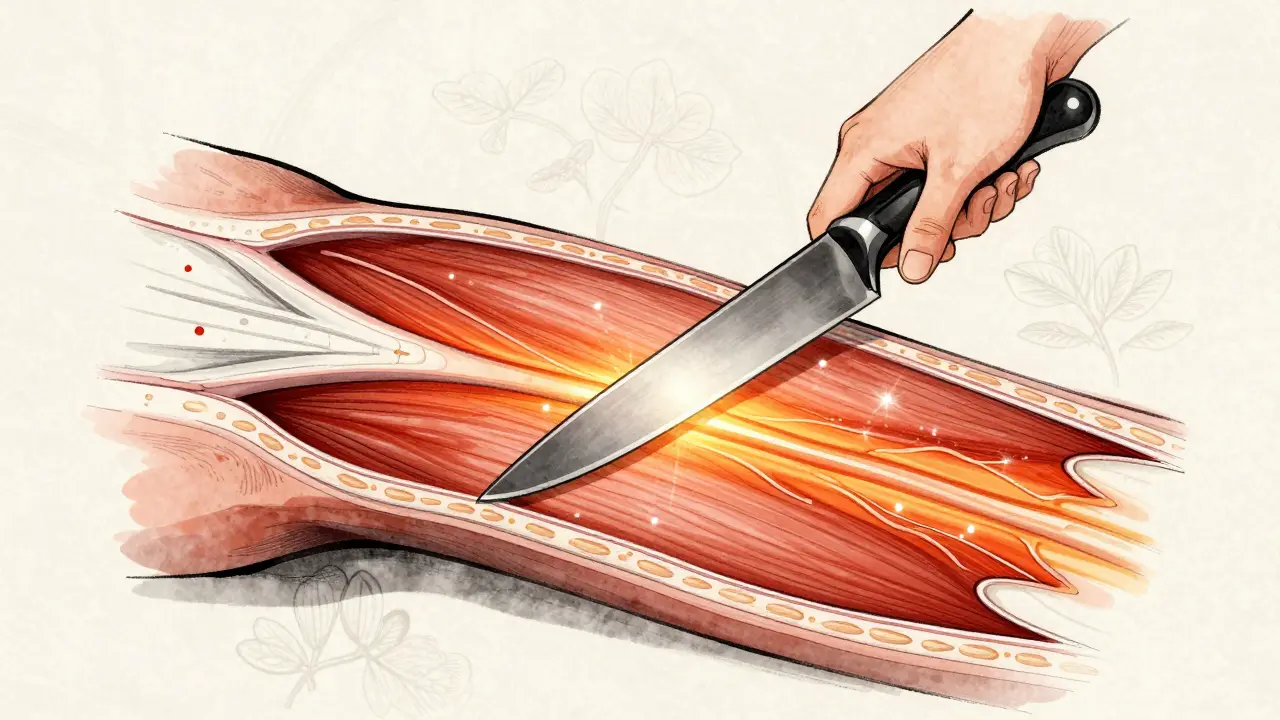
There’s no magic here-just physics and neurology. The blade’s rigid surface allows therapists to apply pressure at exact angles that fingers simply can’t replicate. This targets deep fascia, the connective tissue that wraps around muscles and organs. When fascia gets stuck from stress, injury, or poor posture, it restricts movement and blood flow. Knife massage helps break up these adhesions.
A 2023 study from the Guangzhou University of Chinese Medicine tracked 68 participants with chronic upper back pain. After six sessions of knife massage over three weeks, 79% reported a 50% or greater reduction in pain. The researchers noted increased local blood flow and reduced muscle stiffness measured via ultrasound elastography. The blade’s vibration also stimulates mechanoreceptors in the skin, which send signals to the brain to reduce pain perception-similar to how TENS units work.
It’s not a cure-all, but for stubborn knots, tight hamstrings, or frozen shoulders, it can be a game-changer.
Who Should Try It-and Who Should Avoid It
Knife massage isn’t for everyone. It’s best suited for people with:
- Chronic muscle tension that doesn’t respond to regular massage
- Stiffness from long hours at a desk or repetitive motion jobs
- Low pain tolerance for deep pressure but still want deep results
It’s not recommended for:
- People with open wounds, skin infections, or eczema
- Those on blood thinners or with clotting disorders
- Pregnant women, especially in the first and second trimesters
- Anyone with metal allergies or pacemakers (the blade is non-magnetic, but caution is advised)
First-timers often feel nervous. That’s normal. A good practitioner will always start with light pressure and ask for feedback. You should never feel pain-just deep, intense pressure. If it hurts, speak up. The blade isn’t meant to bruise you. It’s meant to release you.
What to Expect During a Session
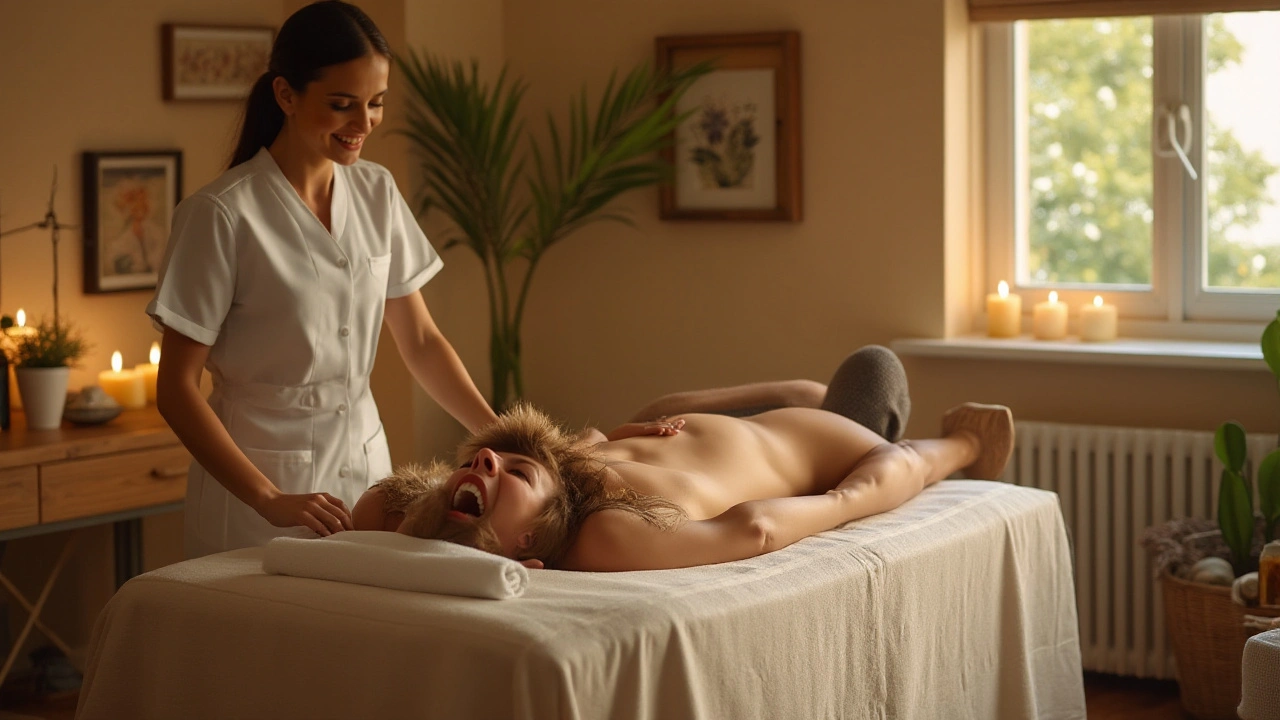
A typical knife massage session lasts 45 to 60 minutes. You’ll lie on a table, fully clothed or draped in a towel, depending on the clinic’s style. The therapist will begin with light strokes to warm up the area, then gradually increase pressure. You might hear a soft, rhythmic shhh-shhh sound as the blade glides over your skin.
Most people feel immediate relief-especially in the neck, upper back, and calves. Some report a sudden surge of energy afterward. Others feel deeply relaxed, even sleepy. It’s common to feel slightly sore the next day, like after a tough workout. That’s normal. It means the tissue is responding.
One client in Melbourne, a 52-year-old yoga instructor with a decade of lower back pain, said: “I’ve tried acupuncture, chiropractic, foam rolling, even cryotherapy. Nothing moved it like the knife. After three sessions, I could bend over to tie my shoes without wincing.”
Where to Find It-and How to Choose a Practitioner
Knife massage isn’t widely available in Western countries. In Australia, it’s mostly found in niche holistic clinics in Melbourne, Sydney, and Brisbane. Some acupuncturists and traditional Chinese medicine practitioners offer it as an add-on service.
Here’s how to find a qualified provider:
- Look for licensed TCM practitioners with formal training in dao yin or blade therapy
- Ask if they’ve trained under a recognized master-ideally from China or Vietnam
- Check that they use a clean, polished metal blade (never a kitchen knife or improvised tool)
- Observe hygiene: blades should be sterilized between clients, and gloves are often worn
- Start with a 30-minute trial session before committing to a full course
Avoid anyone who claims knife massage can “detox” your body, cure cancer, or “remove negative energy.” These are red flags. Real practitioners focus on physical tissue release, not mystical claims.
How Often Should You Do It?
Most people benefit from one session every 10 to 14 days for the first month. After that, maintenance sessions every 4 to 6 weeks are enough to keep tension from building up again. Overdoing it can lead to bruising or nerve irritation.
Unlike deep tissue massage, which can leave you sore for days, knife massage often feels more like a reset. You might feel energized, not drained. That’s because it doesn’t break down tissue-it realigns it. Think of it less as a repair job and more like tuning a violin.
Can You Do It at Home?
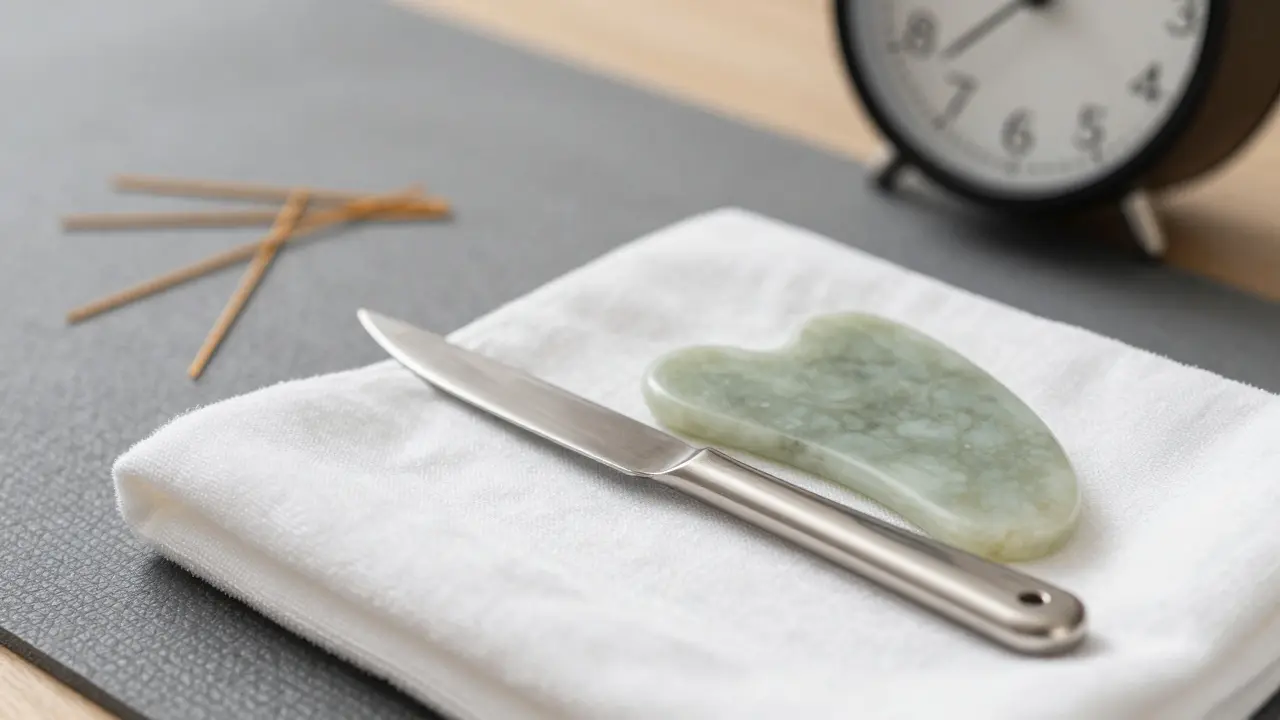
Some people buy small, handheld blade tools marketed for home use. These are usually made of plastic or low-grade metal and lack the precision of professional tools. Using them without training is risky. You could nick your skin, hit a nerve, or aggravate an existing injury.
If you want to try something similar at home, use a gua sha tool made of jade or rose quartz. It’s safer, gentler, and still effective for surface fascia. Save the knife for professionals.
Why It’s Gaining Popularity Now
As people get tired of quick fixes-foam rollers that don’t work, massage guns that just buzz, and pills that mask pain-there’s a growing interest in therapies that go deeper. Knife massage offers something rare: tangible, immediate results without drugs or surgery.
It’s also fitting into the broader trend of reclaiming ancestral healing practices. People are looking for methods that have stood the test of time, not just the latest gadget. Knife massage has been used for over 2,000 years. It survived because it works.
It’s not mainstream yet. But in clinics where it’s offered, waitlists are growing. The demand isn’t for novelty-it’s for real relief.
Final Thoughts: Is It Worth It?
If you’ve tried everything and still carry tension in your body, knife massage might be the missing piece. It’s not a miracle. It’s not painless. But if you’re willing to give it a shot, you might find yourself moving differently-lighter, freer, more alive.
It’s not about the blade. It’s about what the blade can unlock.
Is knife massage dangerous?
No, when done correctly. Professional practitioners use blunt, sterilized metal blades designed for pressure-not cutting. The skin is never broken. The risk comes from untrained individuals using improper tools or applying too much force. Always choose a licensed therapist with formal training.
Does knife massage hurt?
It should feel intense, not painful. Think of it as a deep, buzzing pressure-not sharp or stabbing. If you feel pain, tell the therapist immediately. A good practitioner adjusts pressure based on your feedback. Mild soreness afterward is normal, like after a hard workout.
How long do the effects last?
Most people feel immediate relief that lasts 3 to 7 days. With regular sessions (every 2-4 weeks), the benefits become longer-lasting. Over time, chronic tension patterns begin to dissolve, and you may notice improved mobility and reduced pain even between sessions.
Can knife massage help with migraines?
Yes, for some people. Knife massage applied to the neck, shoulders, and scalp can release tension that triggers tension headaches and migraines. A 2022 pilot study in Shanghai showed a 64% reduction in migraine frequency among participants who received weekly knife massage for eight weeks. It’s not a cure, but it can be a powerful tool in a holistic management plan.
Is knife massage the same as gua sha?
They’re similar but different. Gua sha uses a smooth stone or horn to scrape the skin’s surface, often leaving temporary red marks. Knife massage uses a metal blade to apply deeper, more focused pressure beneath the skin, targeting fascia and muscle layers without surface friction. Knife massage doesn’t typically cause redness or bruising.
Can I combine knife massage with other therapies?
Absolutely. Many people pair it with acupuncture, chiropractic care, or physical therapy. It’s especially effective after a massage or before stretching routines. Just avoid doing it on the same day as intense foam rolling or deep tissue massage-your body needs time to integrate the stimulation.